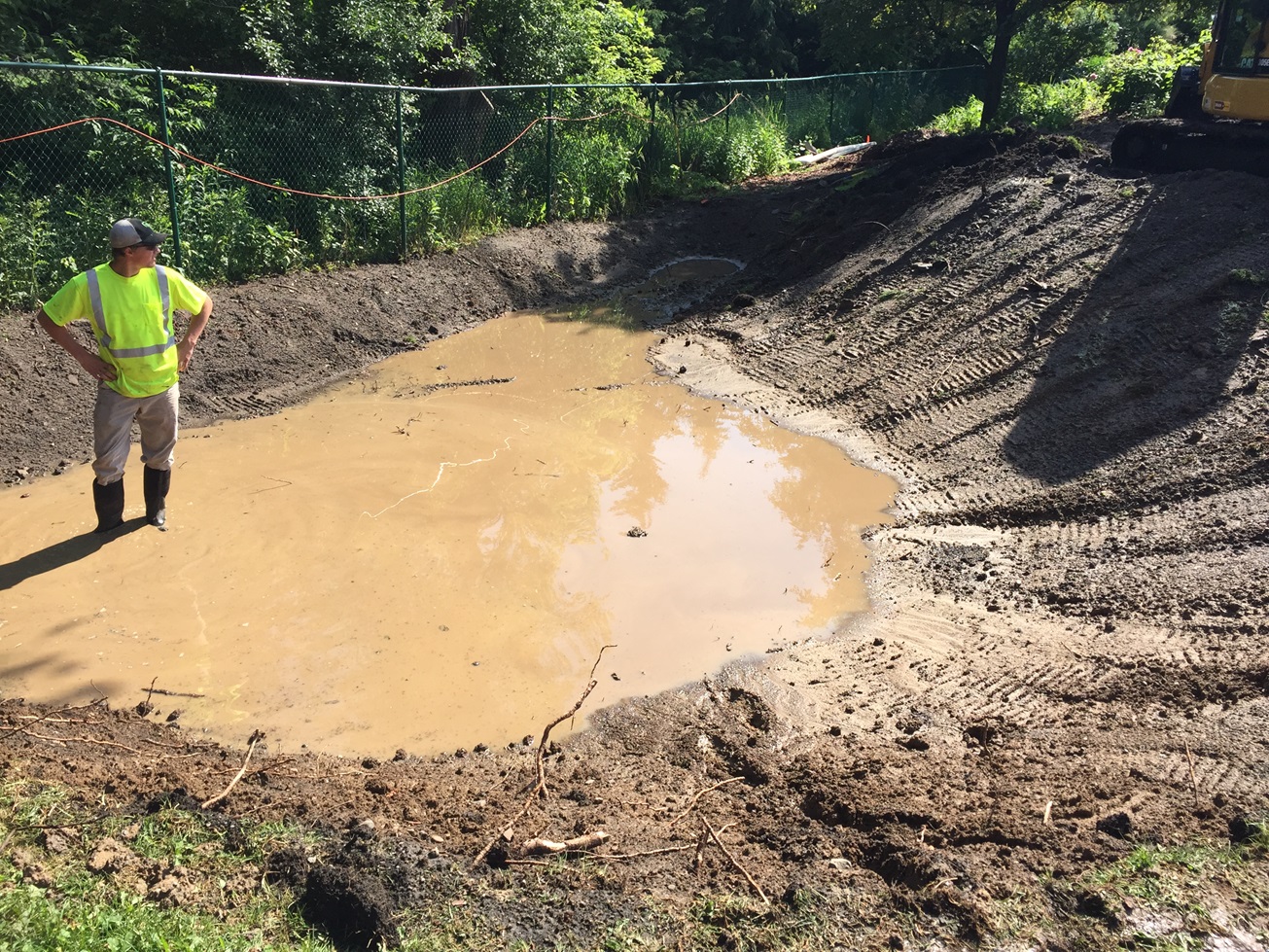
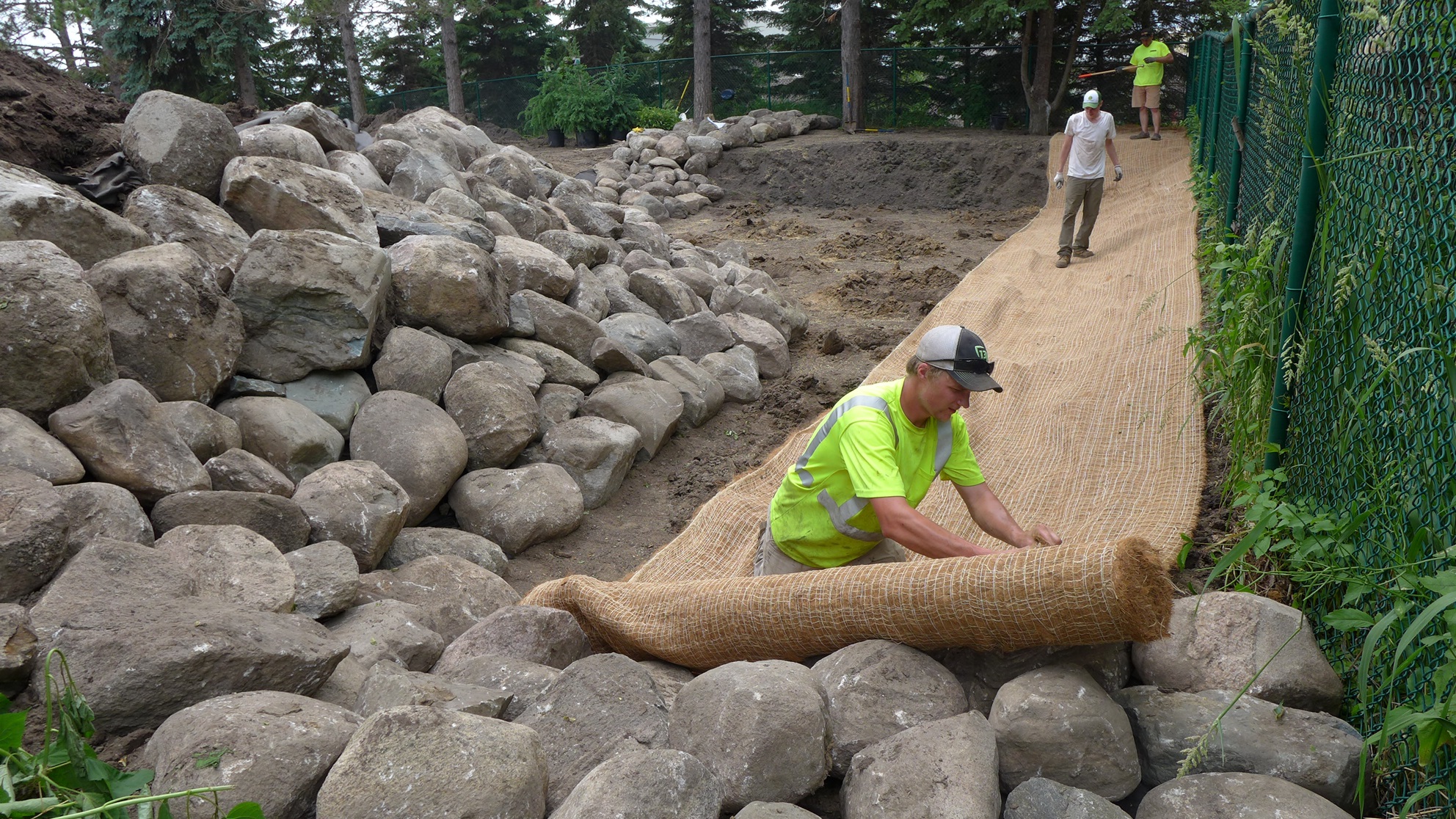
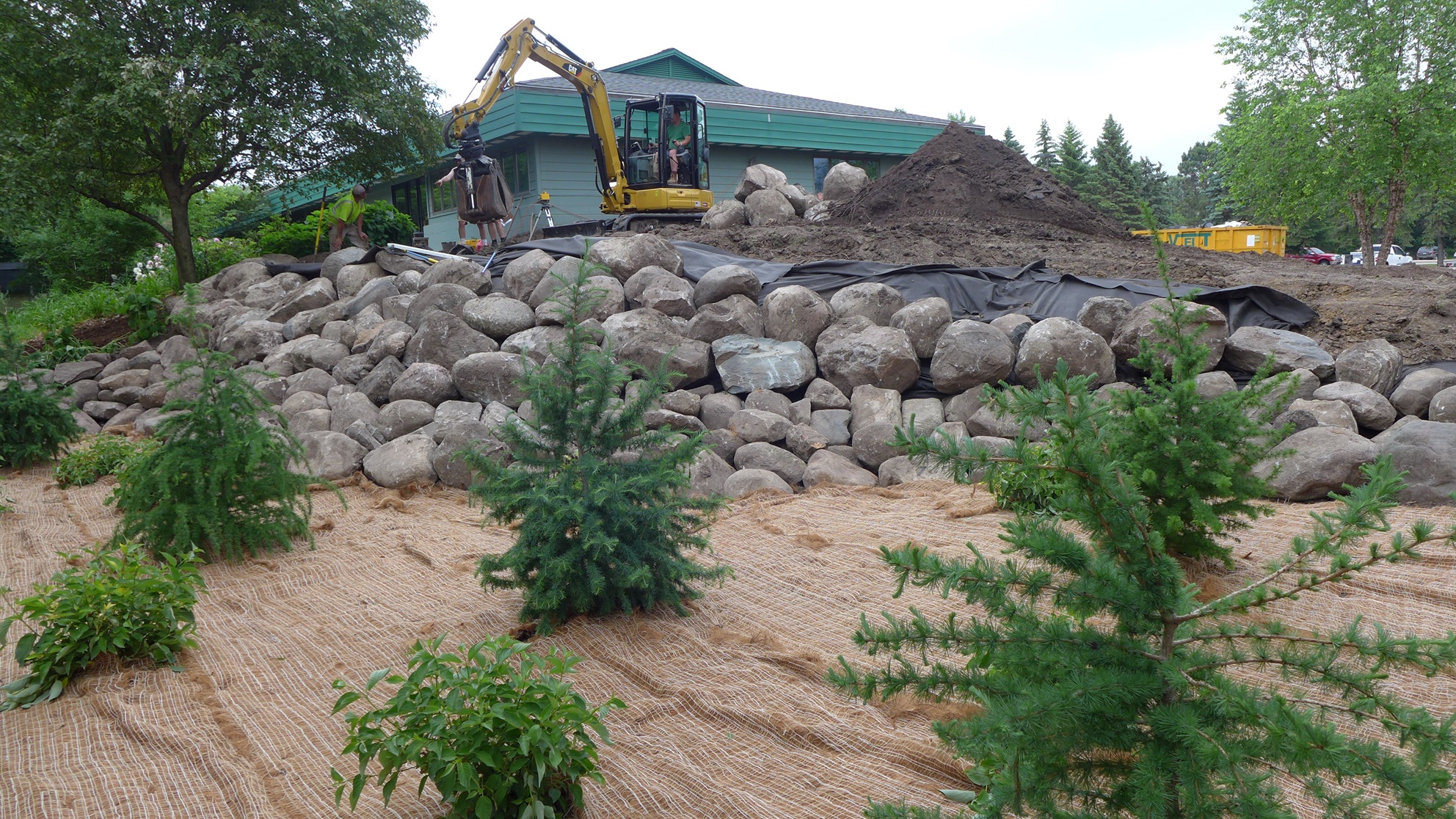
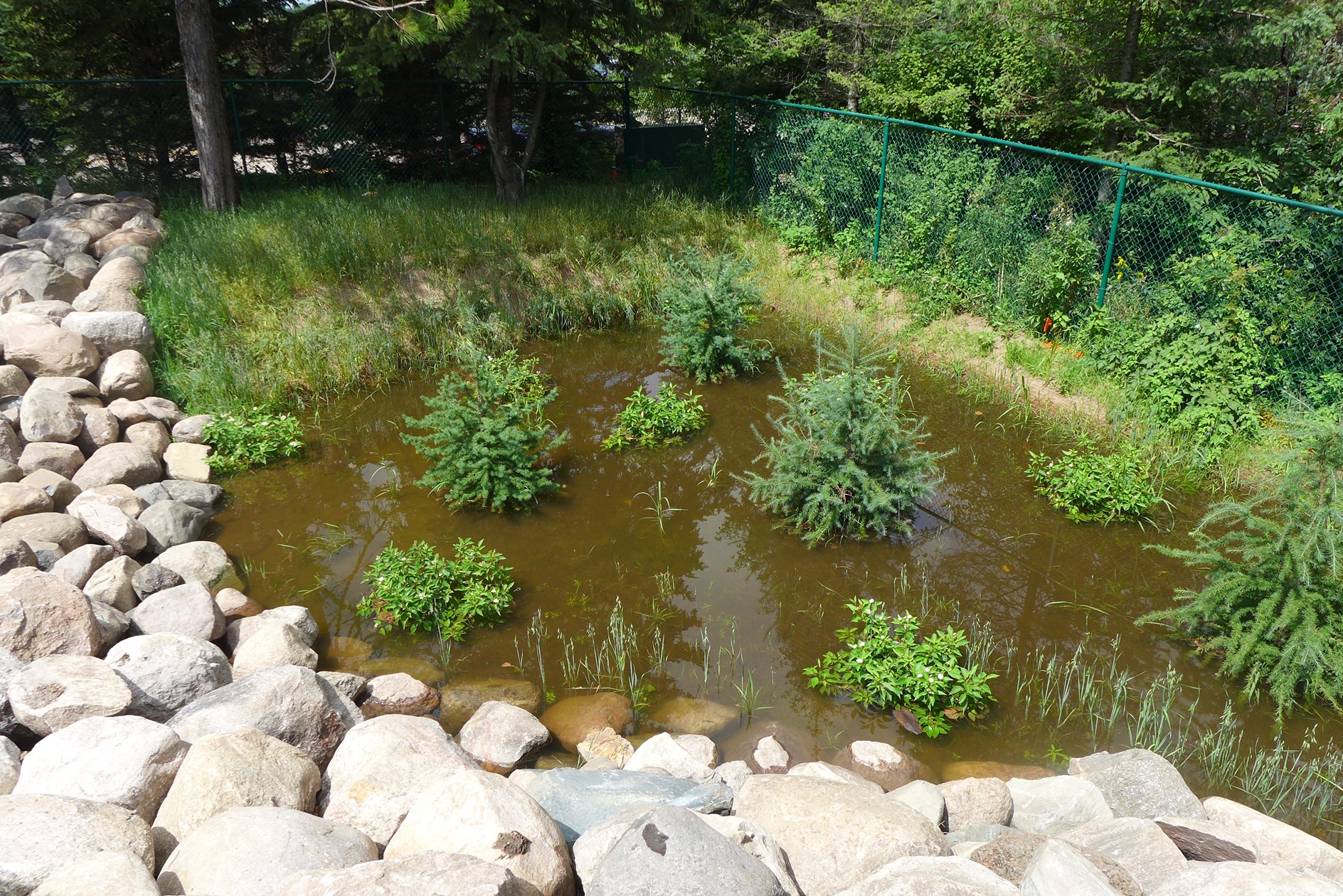
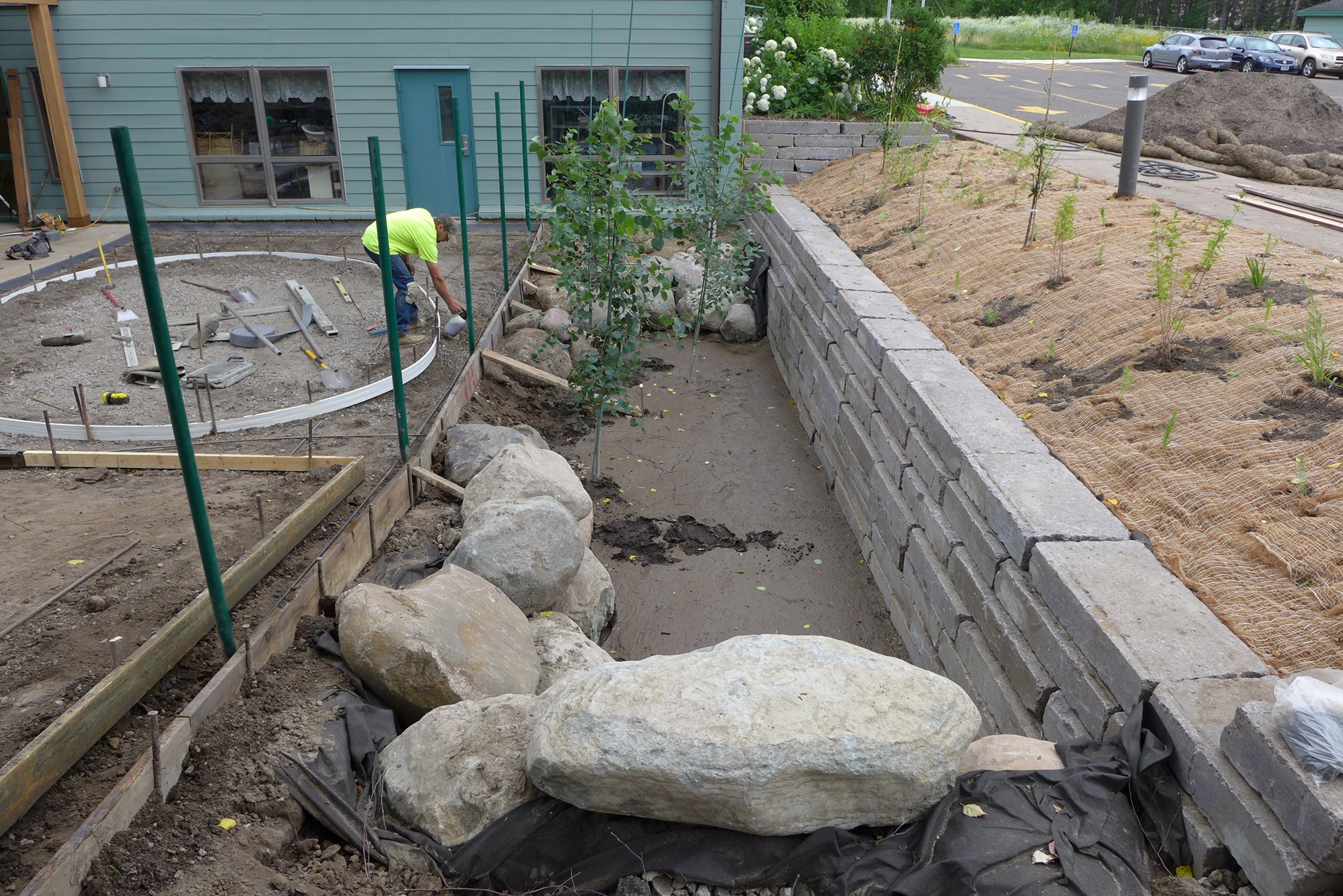
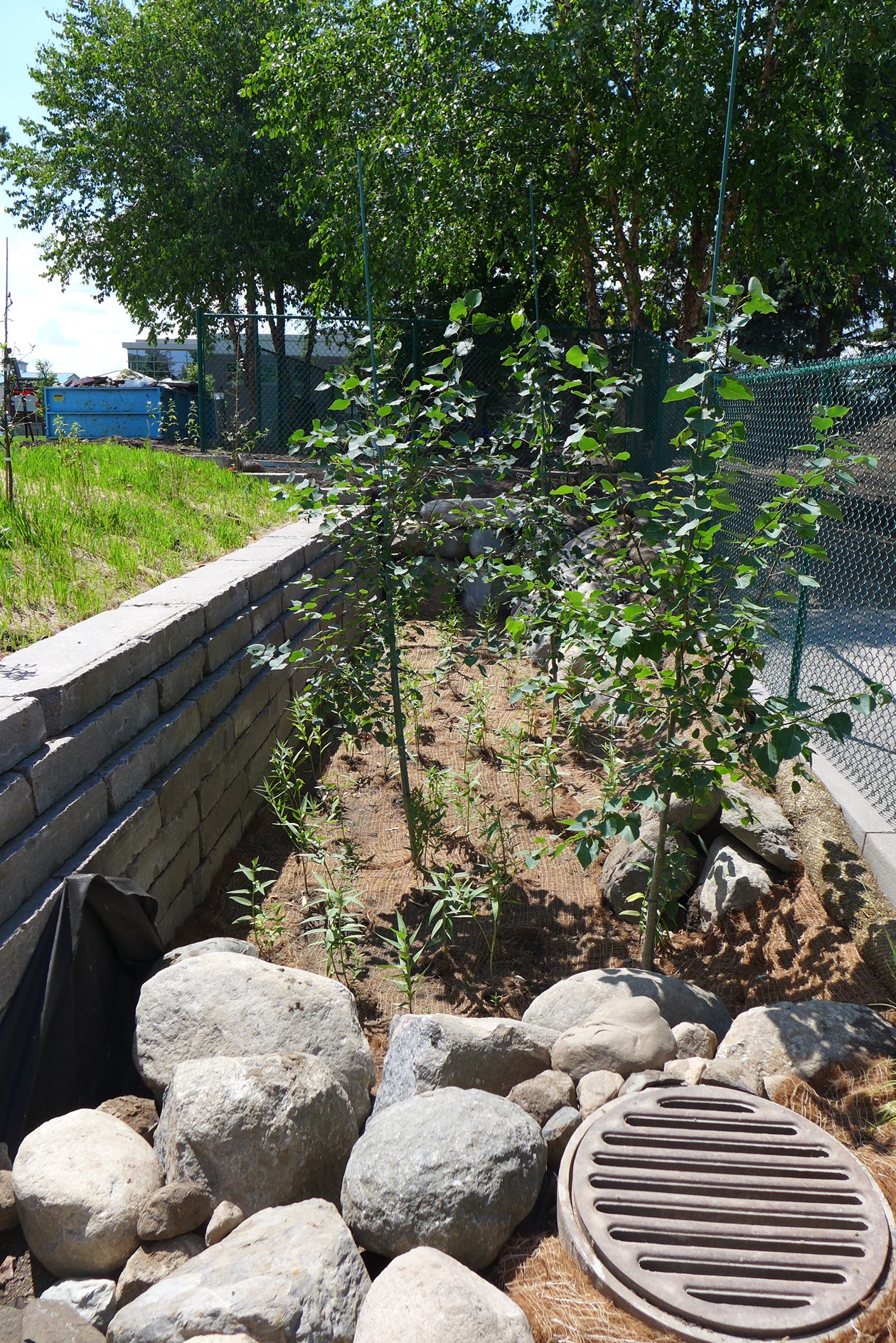
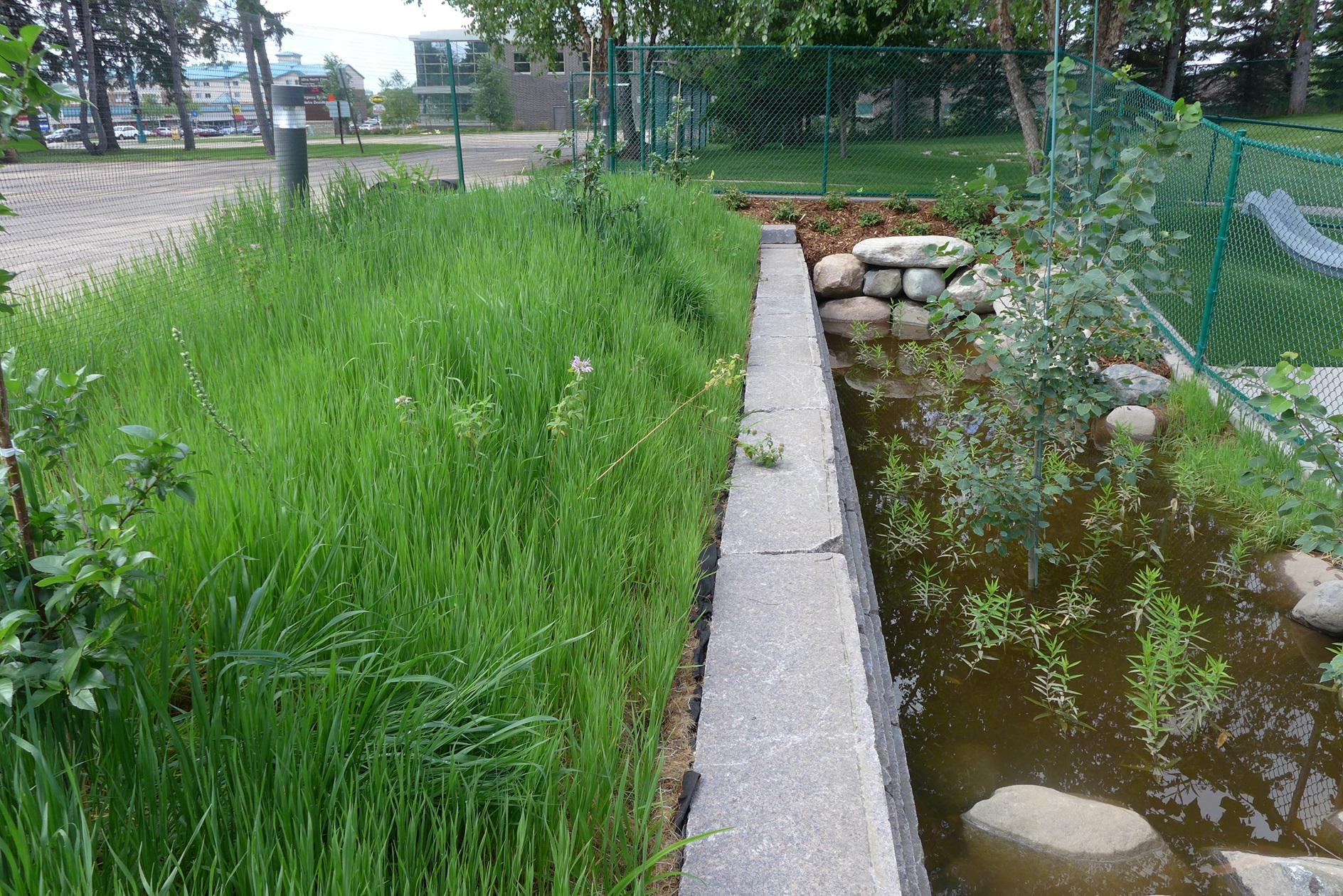
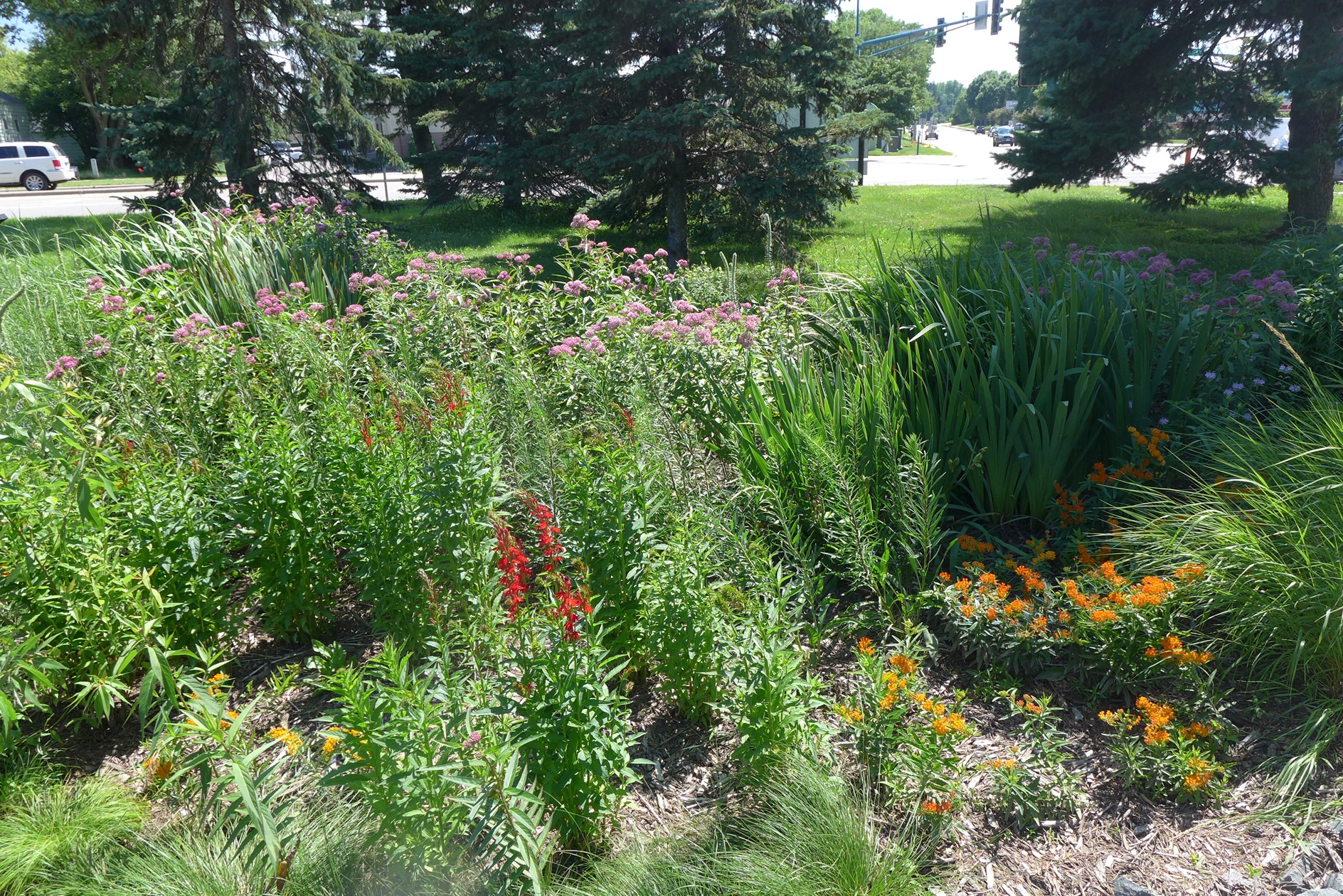
A rain garden is a specially designed planting with a bowl shape to capture and filter rainwater from surrounding hard surfaces. A prairie is a landscape of undisturbed land containing a diversity of grasses and wildflowers that are native to Minnesota.
The White Bear Lake Montessori School grounds includes a rain garden in the parking lot, two rain gardens around the school building, and a prairie referred to as the "field of dreams". These four projects capture and treat a significant portion of water runoff that comes from the school buildings and parking lot.
Some highlights of the school's landscape transformation include:
- A 750 square foot parking lot rain garden with rock pre-treatment areas and over 250 native plants.
- Two rain gardens around the school building, one 450 square foot rain garden and one 400 square foot rain garden that contain over 400 native plants.
- A 27,000 square foot prairie containing over 100 different species of native plants and trails for students to explore and play around the prairie.
- The school has integrated these water quality practices and the prairie in their natural play areas and the Montessori teaching philosophy.
These projects were funded through partnerships between White Bear Lake Montessori School, Ramsey County Soil and Water Conservation Division (RCSWCD), and VLAWMO. The White Bear Lake Montessori School provided funding through local cash match for all of the projects. The parking lot rain garden was also funded through Minnesota Board of Water and Soil Resources Clean Water Funds, and the other two rain gardens and the prairie were funded by a VLAWMO Landscape Level 2 grant and a grant from RCSWCD.
The projects provide improved stormwater runoff and groundwater recharge for the greater area, serves as an educational resource for students, and addresses a long history of water issues in the school basement.
White Bear Montessori captures and treats almost all of its stormwater runoff on site. The various projects provide pollinator habitat, a space for student exploration. The large basins reduce stormwater runoff volume, sedimentation, and total phosphorous draining into Lambert Creek.
Estimated annual stormwater reductions for Lambert Creek:
- 81,156 gallons of stormwater reduced (2,029 bathtubs)
- 101 lbs of sediment reduced
- .26 lbs of total phosphorus reduced (1 lb of phosphorus creates up to 500 lbs of algae).