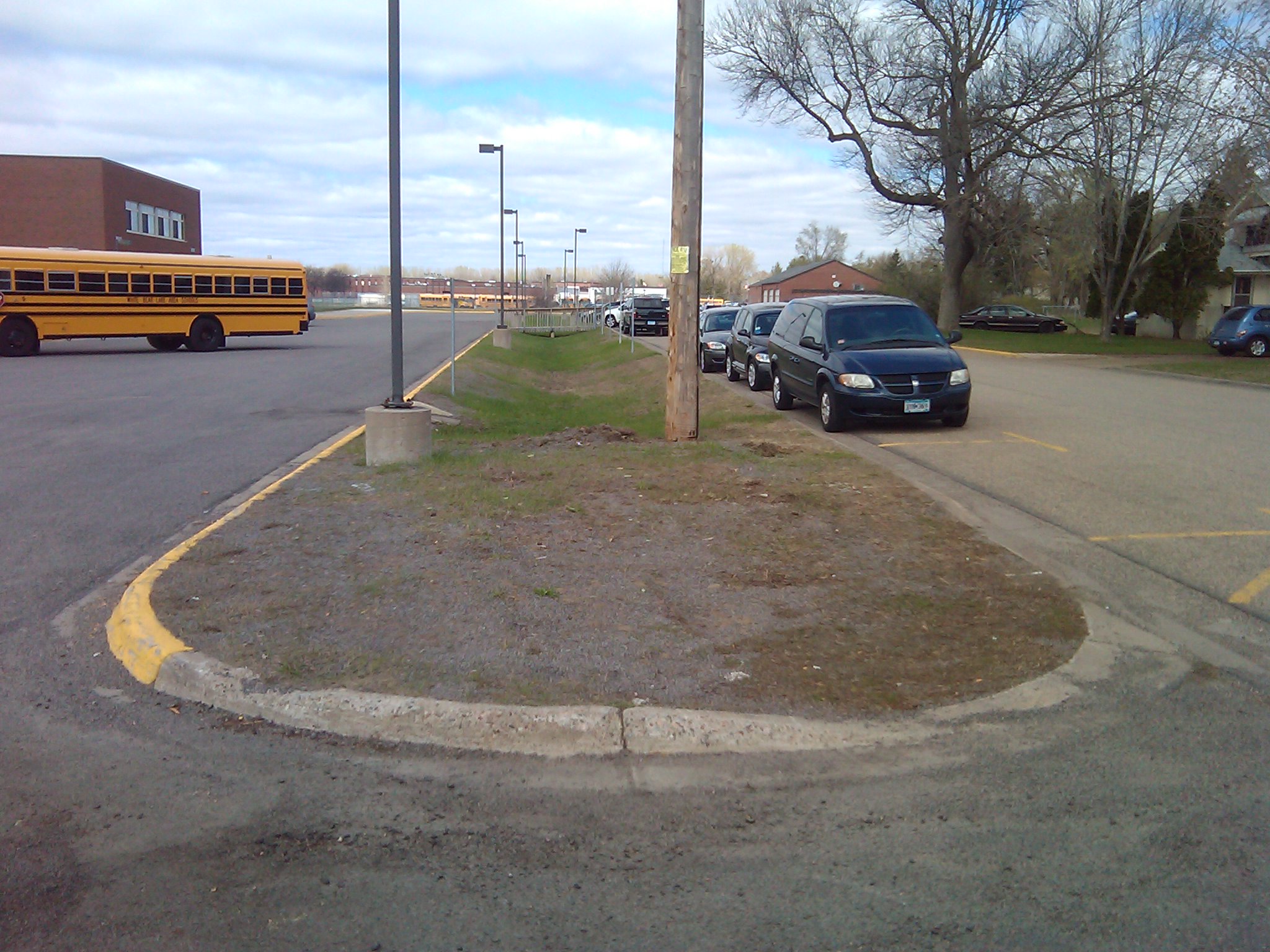
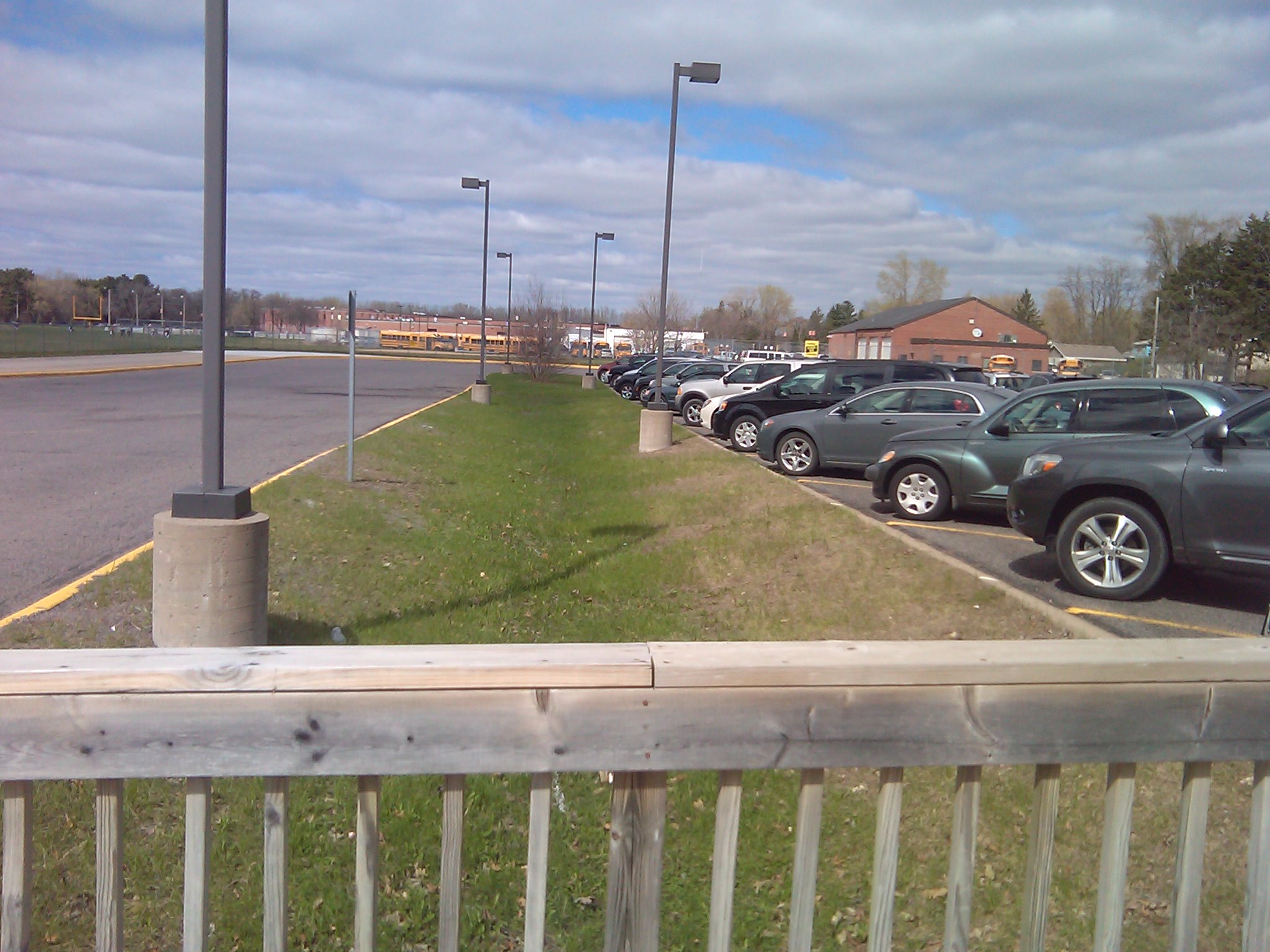
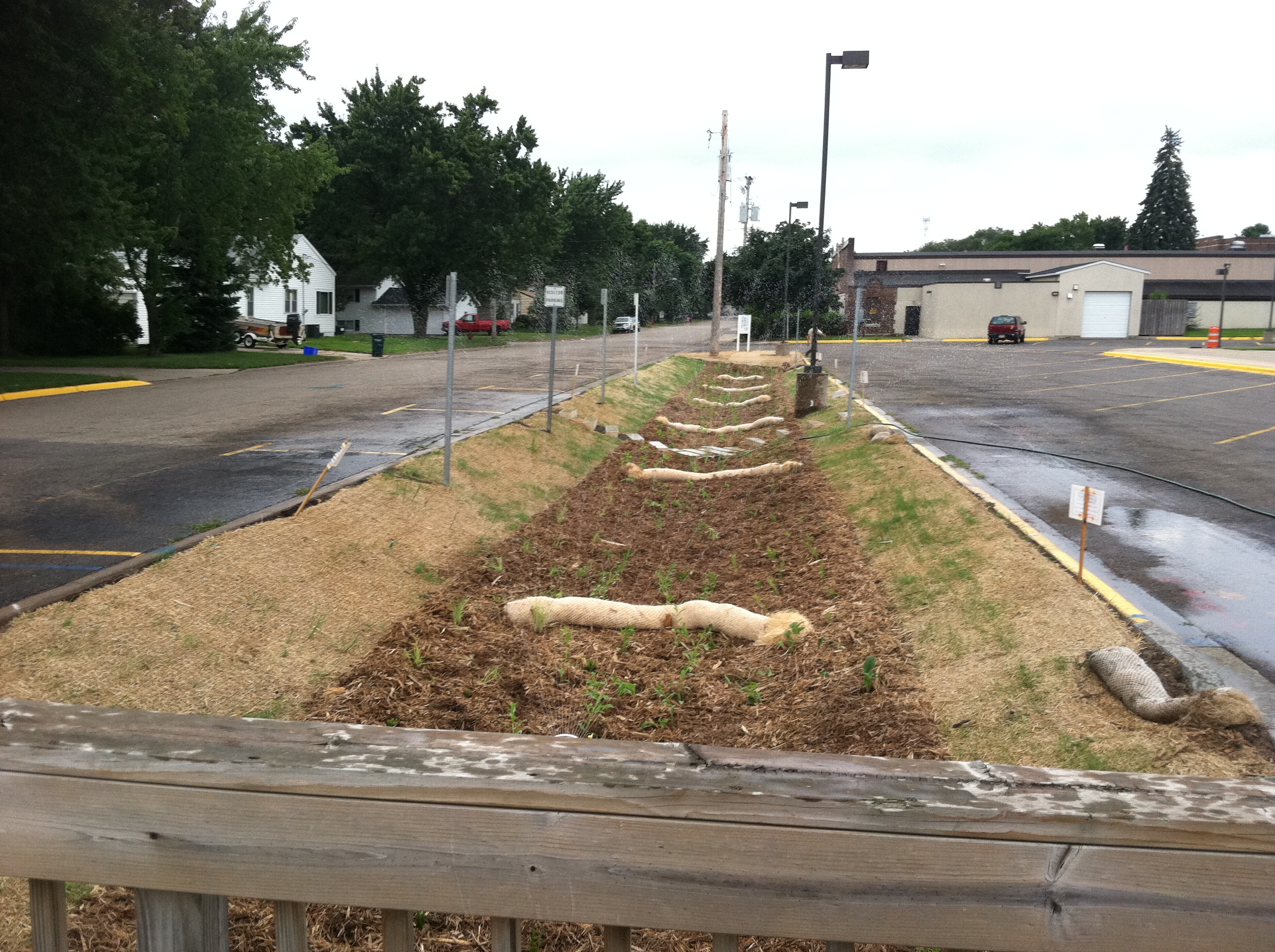
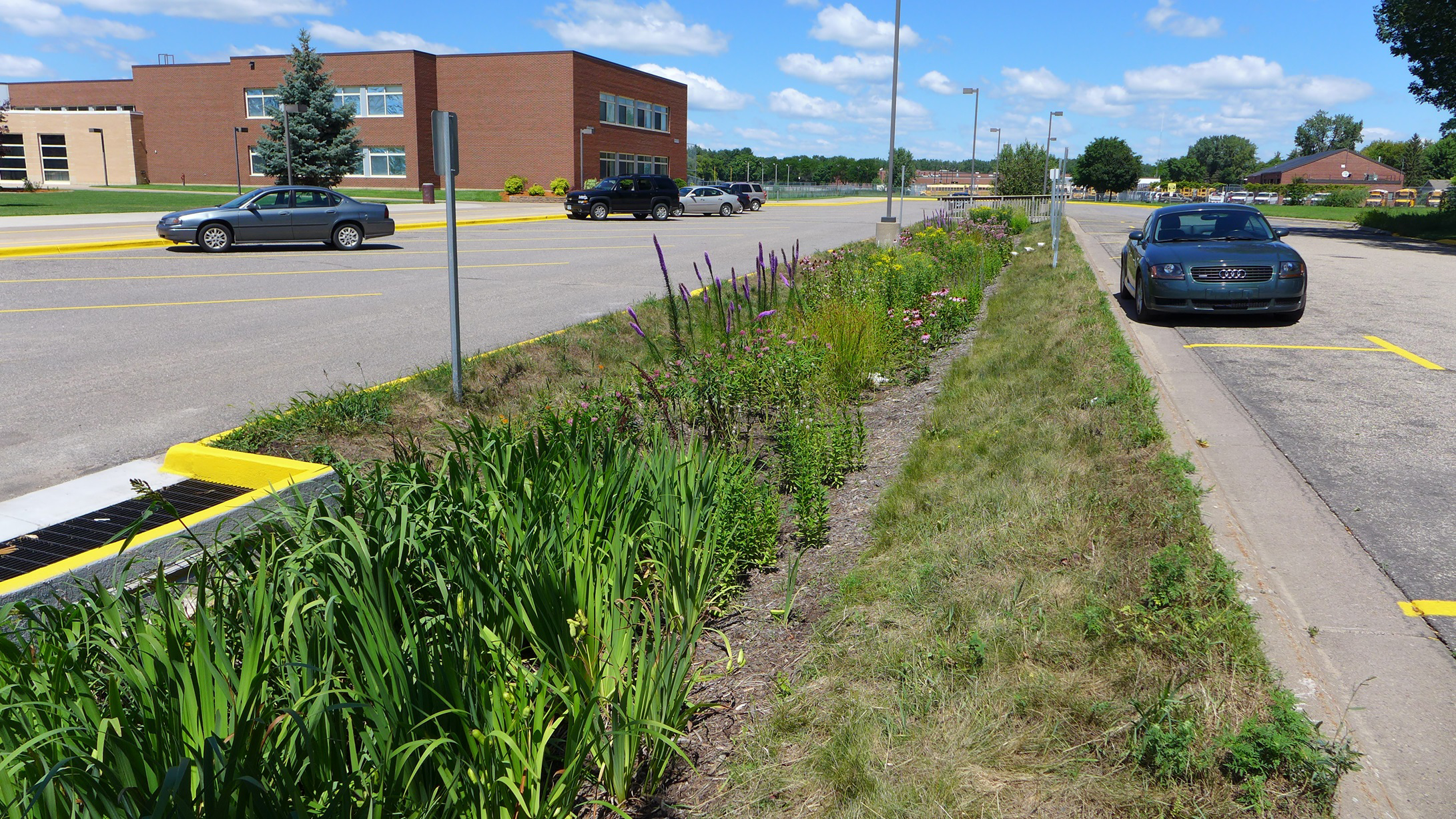
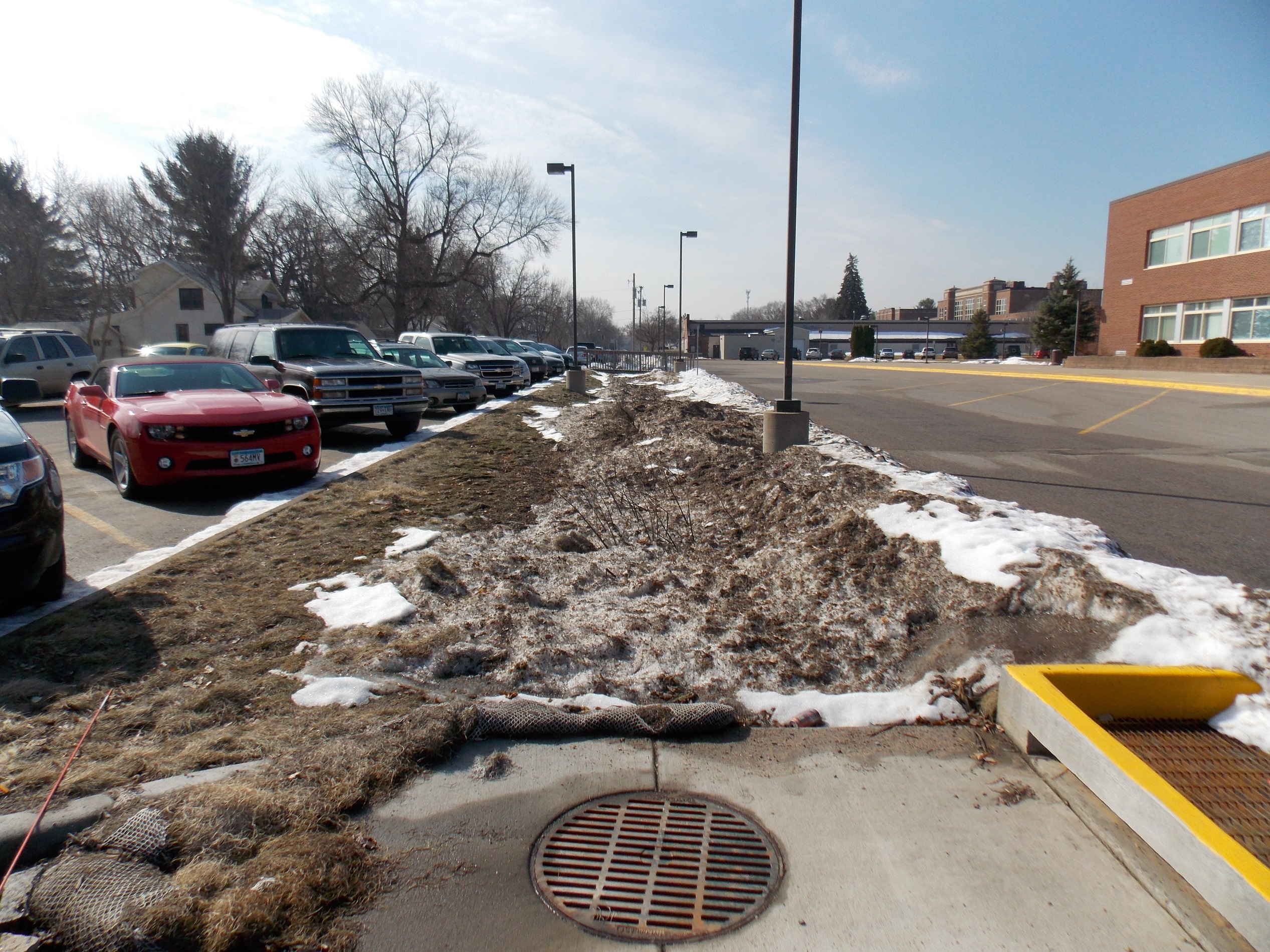
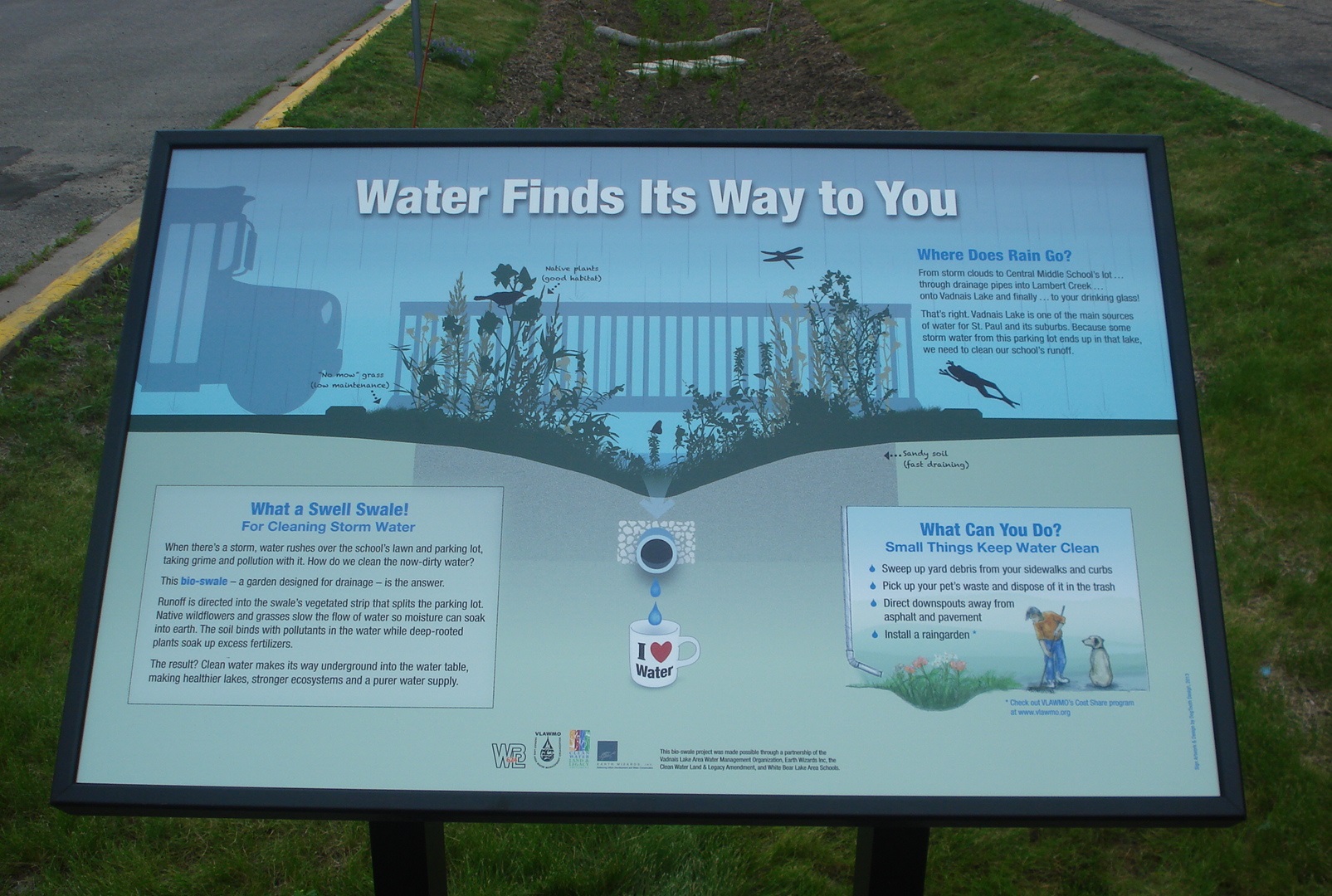
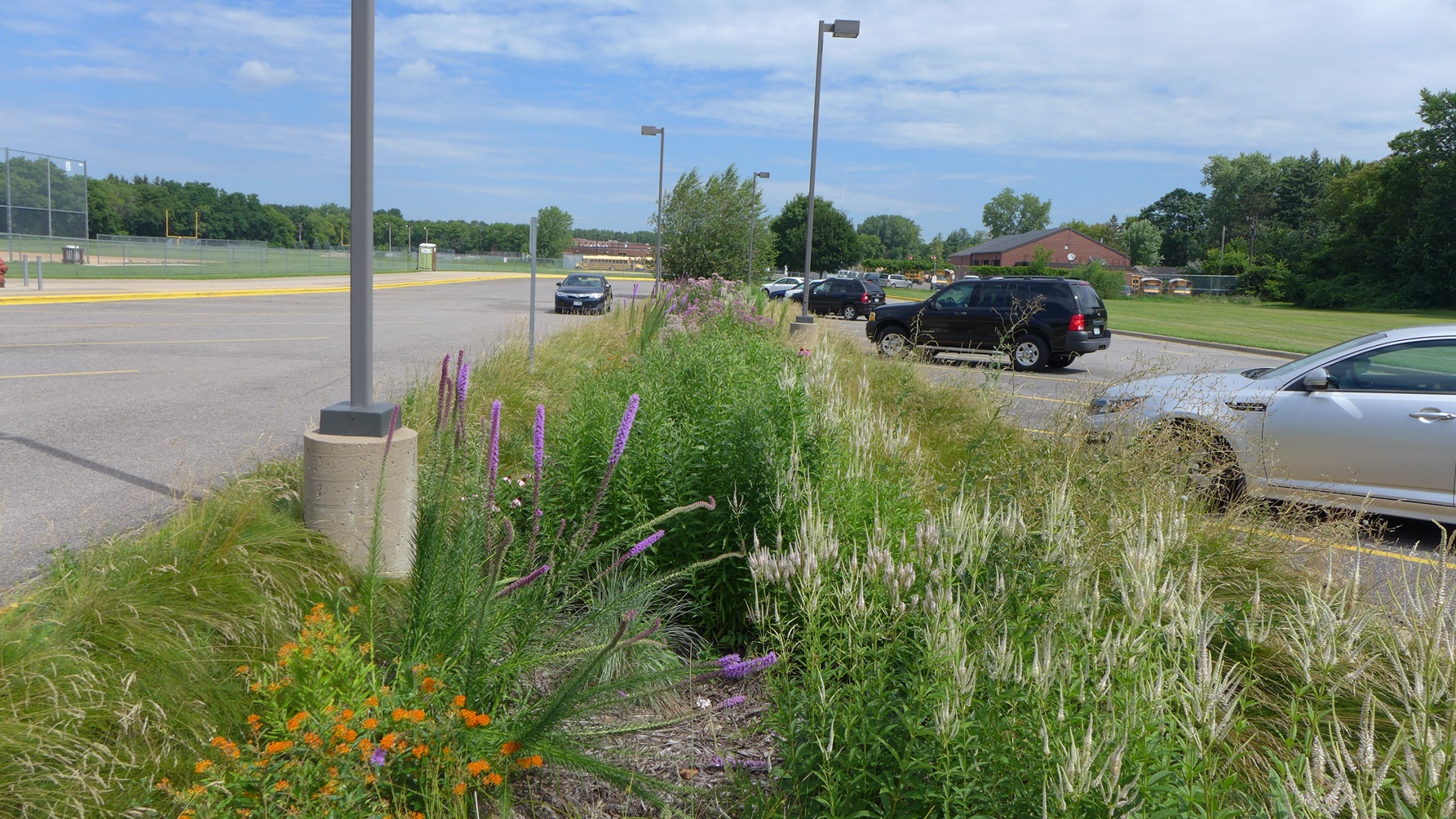
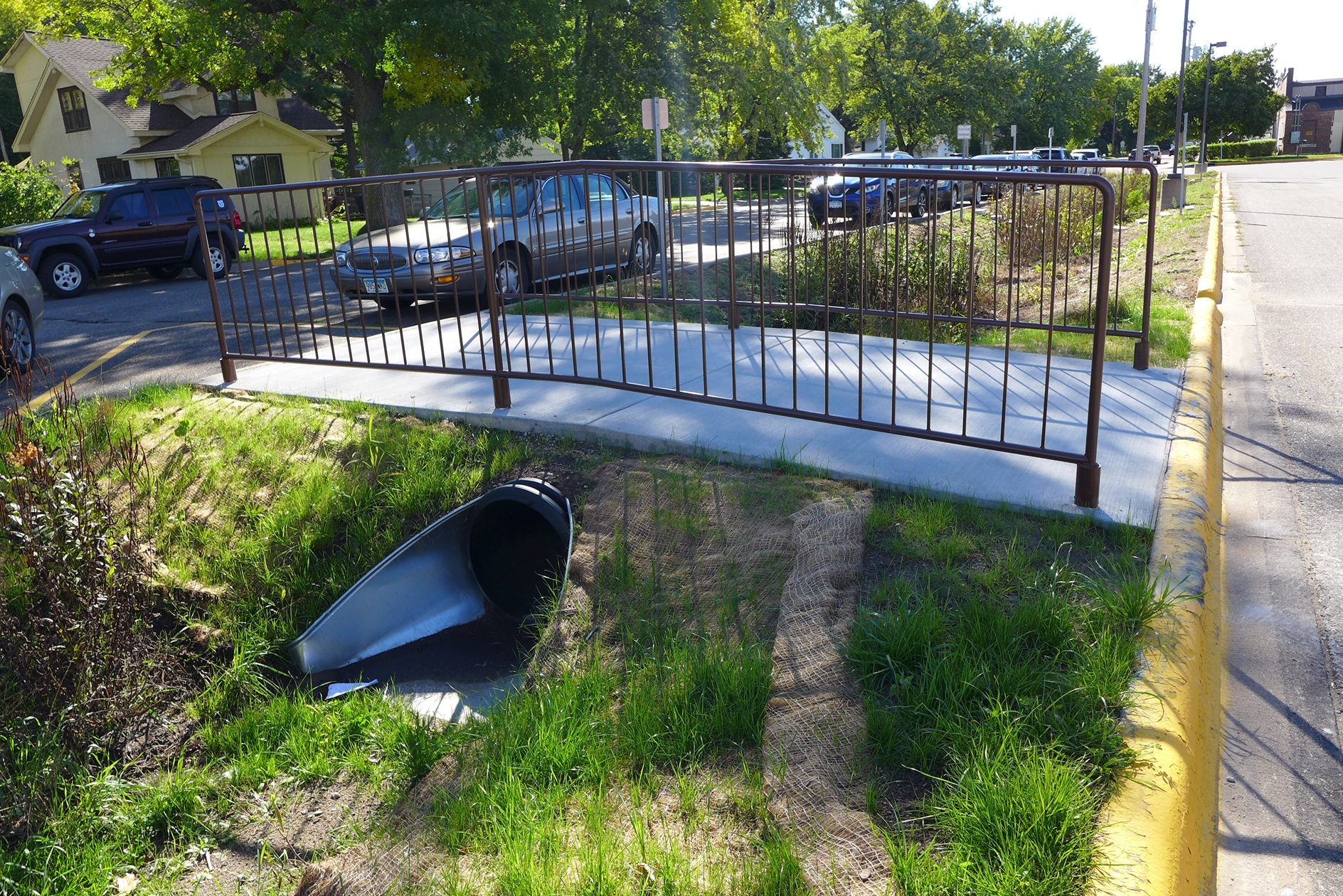
This 270 square foot bioswale near Central Middle School's entrance captures and treats water that runs off the school's roof, parking lot, and nearby ballfields before it drains to Lambert Creek. This bioswale has unique features including:
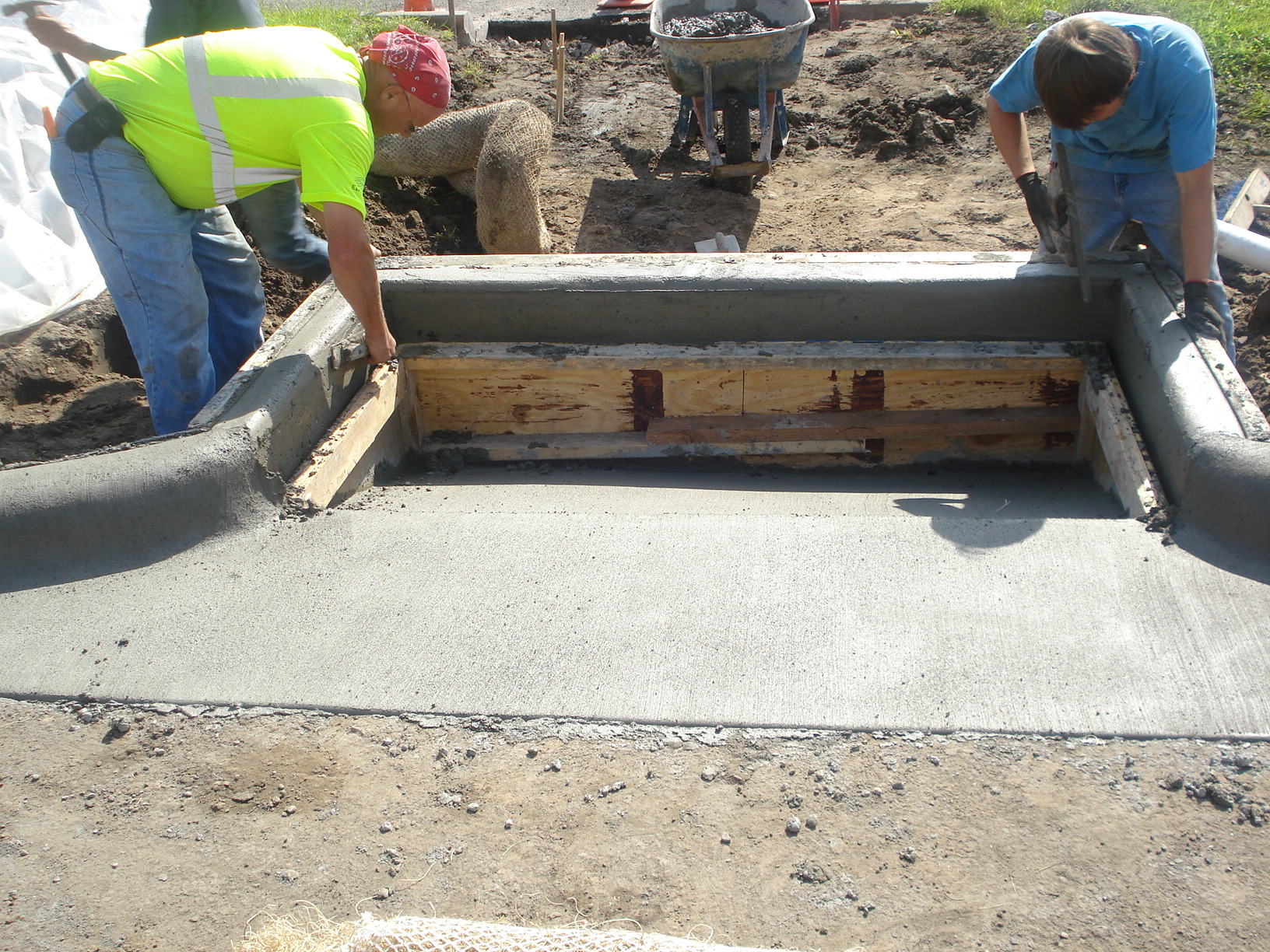
- 6 concrete curb cuts to capture runoff and 2 pretreatment structures to collect sediment, debris, and trash before it can enter the bioswale.
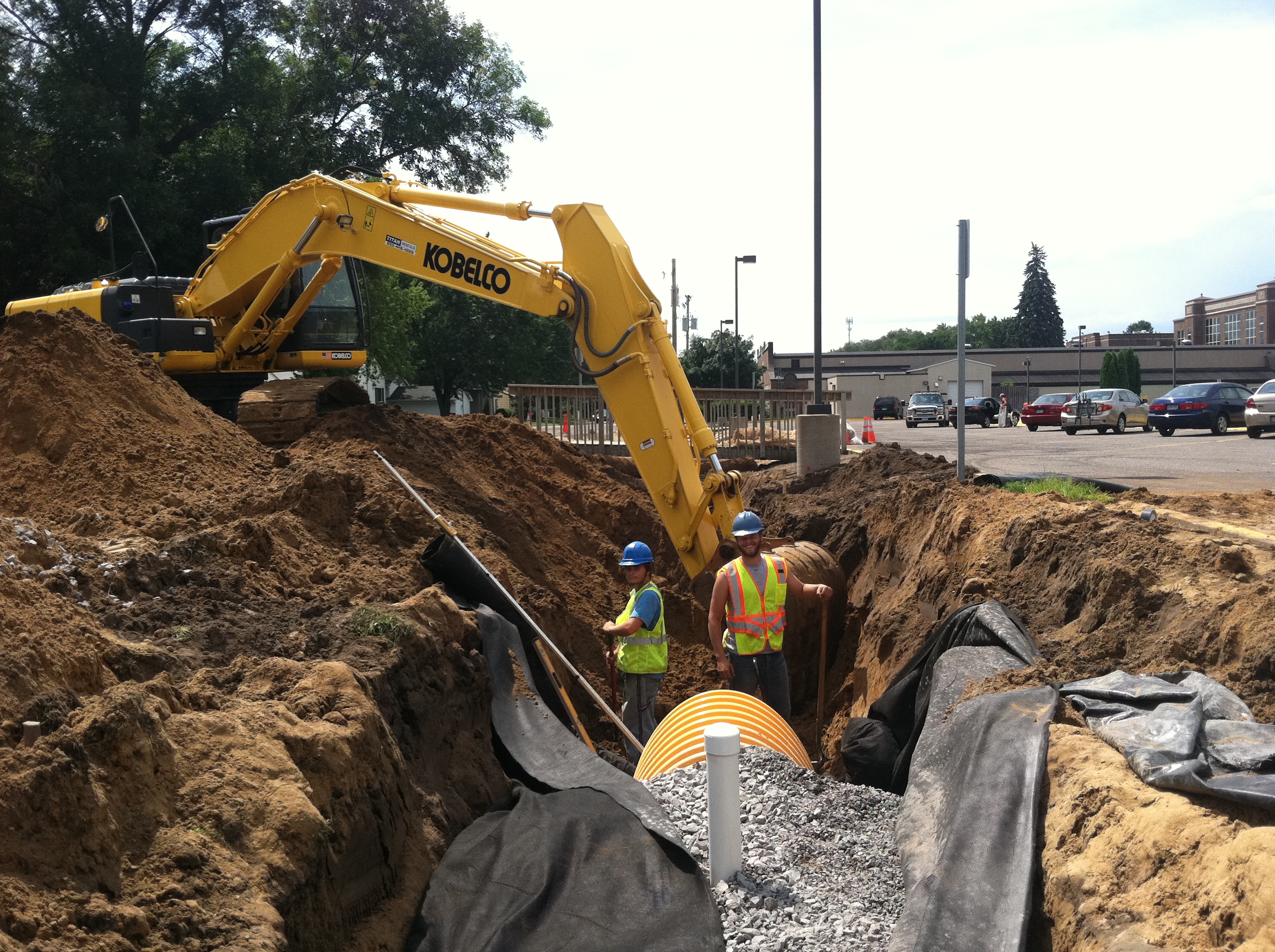
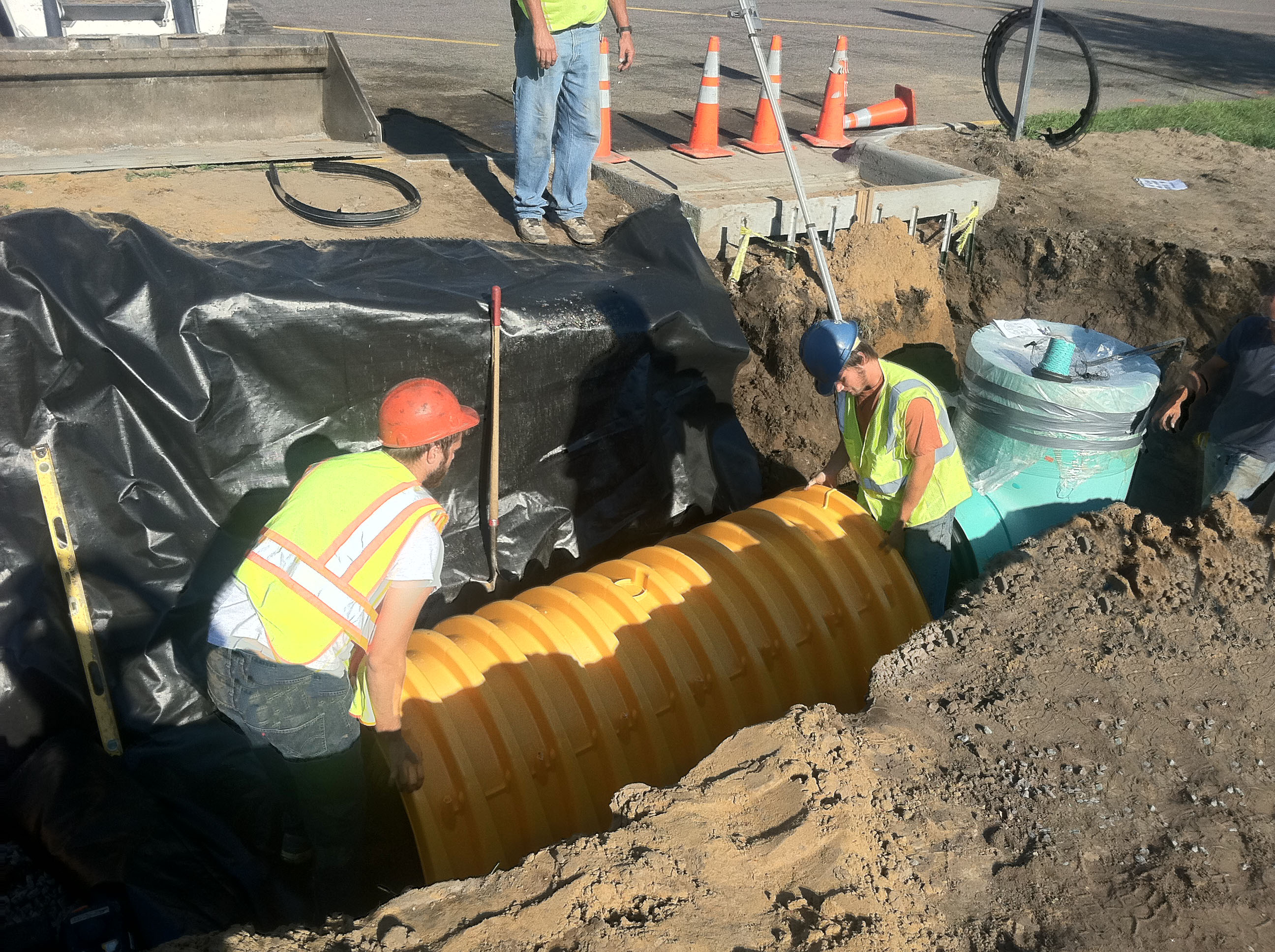
- 135 feet of underground storage chambers, which can hold 13,330 gallons of water.
- Stone pathways to help slow down runoff and provide students a way to walk through the bioswale.
- Compost to amend the soil and allow water to soak in more quickly.
- 1,000 native plants to encourage water to soak into the bioswale and provide pollinator habitat.
This project was a partnership between White Bear Lake School District 624, Ramsey County Soil and Water Conservation Division, and VLAWMO. Funding was provided by VLAWMO and the Board of Water and Soil Resources Clean Water Fund program.
VLAWMO completed a study to find areas that would provide an opportunity to reduce water runoff and improve water quality. An existing swale at the Central Middle School was identified as an area that could provide a significant water quality improvement. It previously contained compacted soils, turf grass, and bare soil areas that provided limited water infiltration and sent untreated water directly to a storm sewer pipe at the end of the swale. The school was also experiencing flooding problems in the parking lot. Retrofitting the existing swale to improve water quality and reduce the parking lot flooding became a priority solution.
This area sends water to Lambert Creek, which eventually flows to East Vadnais Lake. Lambert Creek is currently impaired for E. coli. This project is one way of addressing this bacteria pollution and filtering more stormwater before it reaches the creek.
The bioswale is estimated to capture about 1,426,608 gallons of stormwater runoff annually. That's about the equivalent of 4.4 football fields flooded with water 1 foot deep. It is also estimated to remove 649 pounds of sediment and 3.6 pounds of total phosphorus annually.