
White Bear Lake Curb Cut Rain Gardens

Quick glimpse
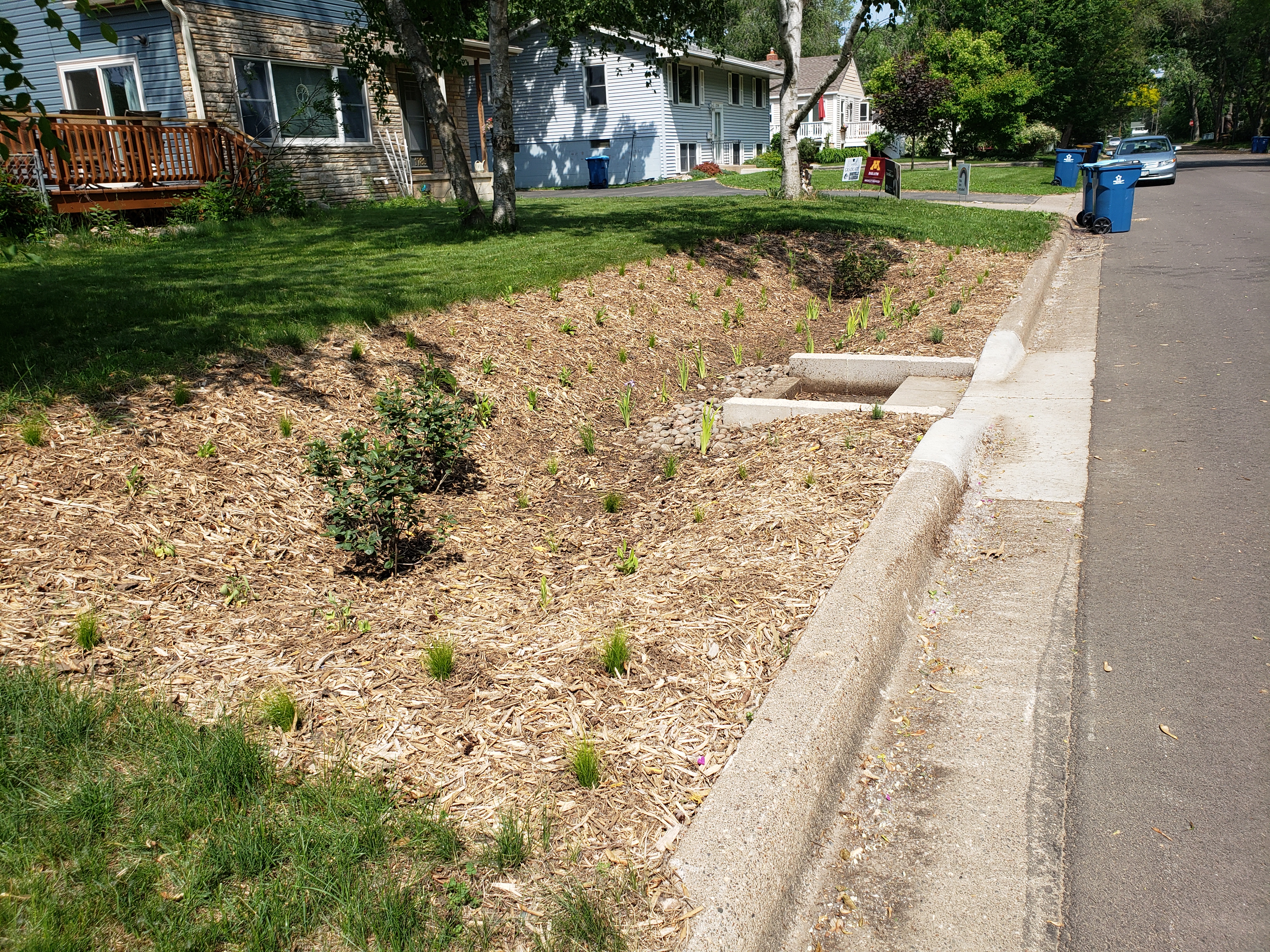
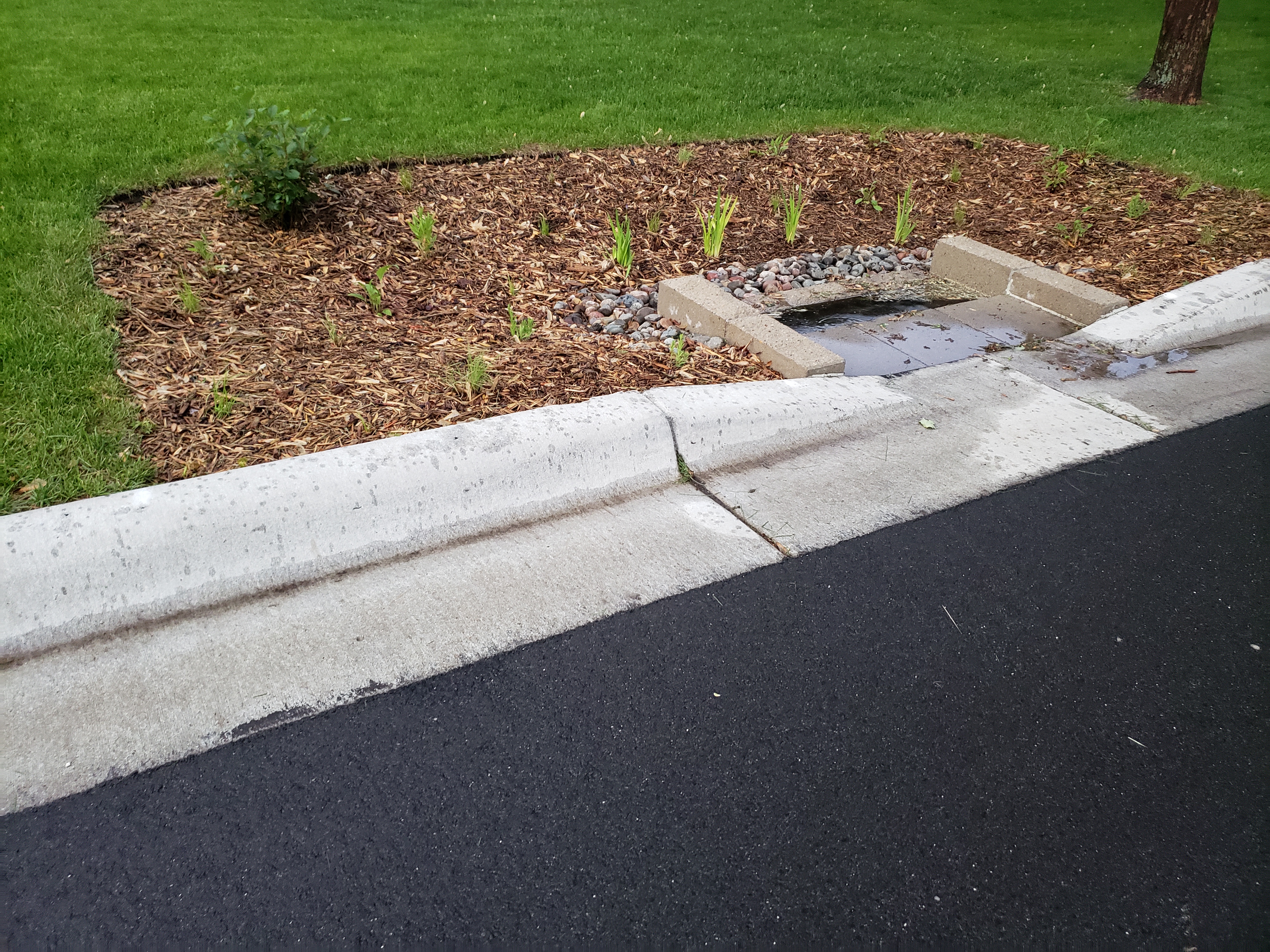
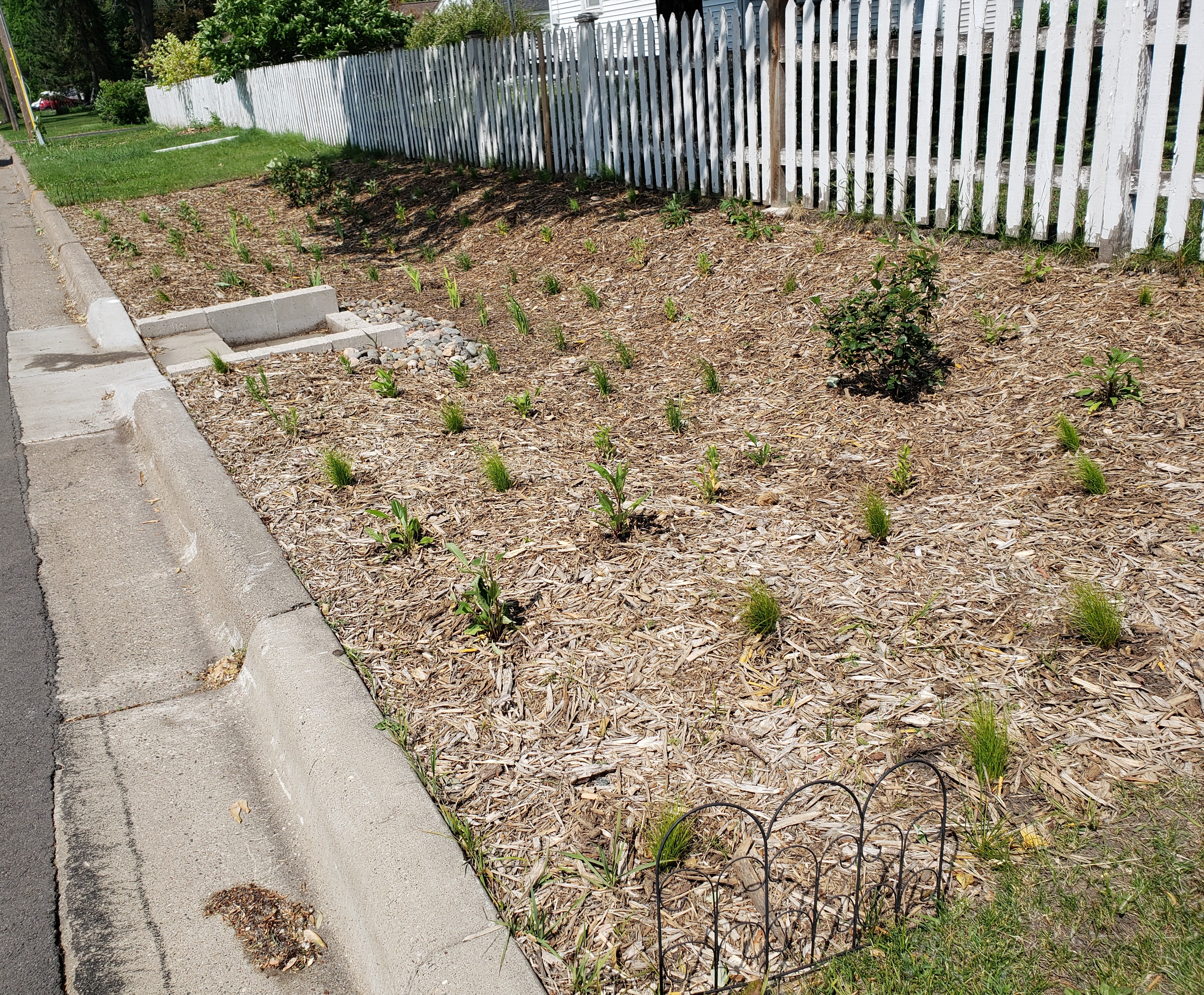
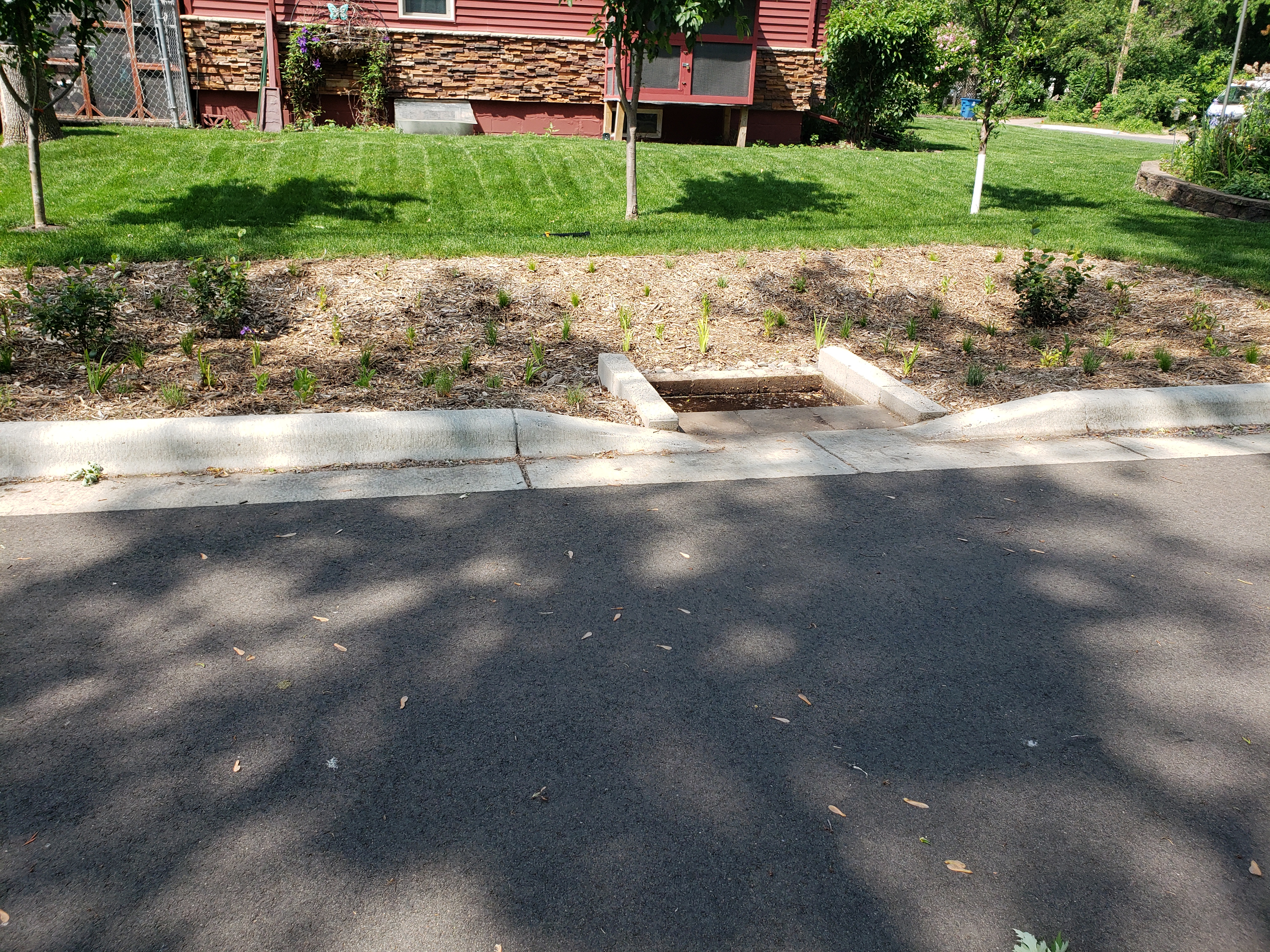
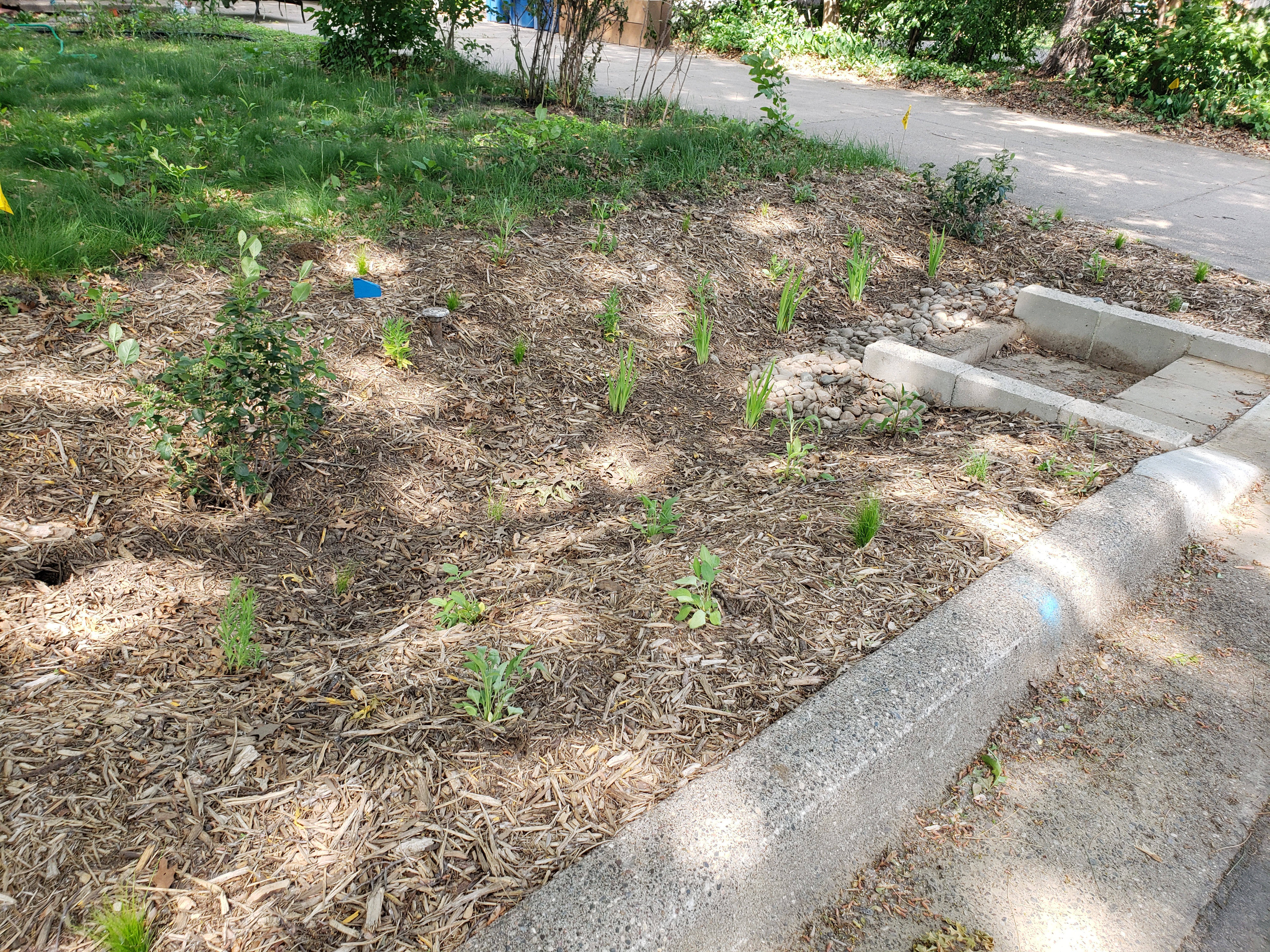
A rain garden is a specially designed planting with a bowl shape to capture and filter rainwater from surrounding hard surfaces. A curb cut rain garden means a break was created in the curb of the street to allow water runoff directly from the street to enter the rain garden.
This project installed 5 curb cut rain gardens, totaling 1,505 square feet, which capture and treat water that runs off 2nd Street, 3rd Street, Krech Avenue, and Birch Lake Avenue (1.86 acres) before it reaches Lambert Creek. Each of the rain gardens includes:
- A concrete curb cut with a pretreatment structure that collects sediment, debris, and trash before it can enter the rain gardens
- 12 inches of amended soil mix to help water soak into the rain gardens
- Over 400 total native plants that create critical pollinator habitat and filter pollutants from water runoff. Each rain garden on average has about 91 native plants
Funding
This project was made possible through a partnership between the City of White Bear Lake, Ramsey County Soil and Water Conservation Division, VLAWMO, and White Bear Lake residents. The local match was provided by the residents and VLAWMO provided grant funding through the Landscape Level 2 grant program, as well as the Minnesota Board of Water and Soil Resources (BWSR) Watershed Based Implementation Funding Program (WBIF).
Reason for project
Prior to modern development, rain could soak into the ground where it fell. Today, rain must cross obstacles such as parking lots, rooftops, and streets before it can infiltrate. We call the rain or snowmelt that falls onto impervious surfaces stormwater. As it flows across hard surfaces, stormwater picks up any pollutants in its path.
Projects that help rain soak into the ground are a key step toward minimizing water pollution and improving water quality. Street reconstruction projects offer a valuable opportunity to incorporate stormwater treatment practices while the area is under construction. This offers a win-win situation: updated streets and improved water quality.
Results
These rain gardens are estimated to annually capture about 268,334 gallons of water, and removes 0.67 pounds of total phosphorus and 122 pounds of total suspended solids from water runoff before it reaches Lambert Creek.
Lambert Creek is currently impaired for E. coli. This project is one way of addressing this bacteria pollution and filtering more stormwater before it reaches the creek.
Related projects
Elmwood Park
A curb cut rain garden located at Elmwood Park in Vadnais Heights.
Whitaker Pond Biochar Filter
A stormwater biochar filter adjacent to Whitaker Pond in White Bear Township.
Bridgewood Park
A curb cut rain garden located off of the parking lot at Bridgewood Park in Vadnais Heights.
Lambert Creek Meander
The restoration of a portion of Lambert Creek from a straight, agricultural ditch to a meandering creek in Vadnais Heights.
White Bear Montessori
Multiple rain gardens and a prairie at the White Bear Montessori School in White Bear Lake.
The Bear's Backyard
A rain garden at the Vadnais Heights Elementary School.
Central Middle School
A bioswale in the parking lot of Central Middle School in White Bear Lake.
Heritage Hall
A large rain garden located at the City of Gem Lake's Heritage Hall in White Bear Township.
Lambert Lake Pond
A holding pond to support Lambert Creek in Vadnais Heights.
Lambert Creek Weirs
2 water control structures (weirs) on Lambert Creek at its intersection with Grass and Rice Lakes.