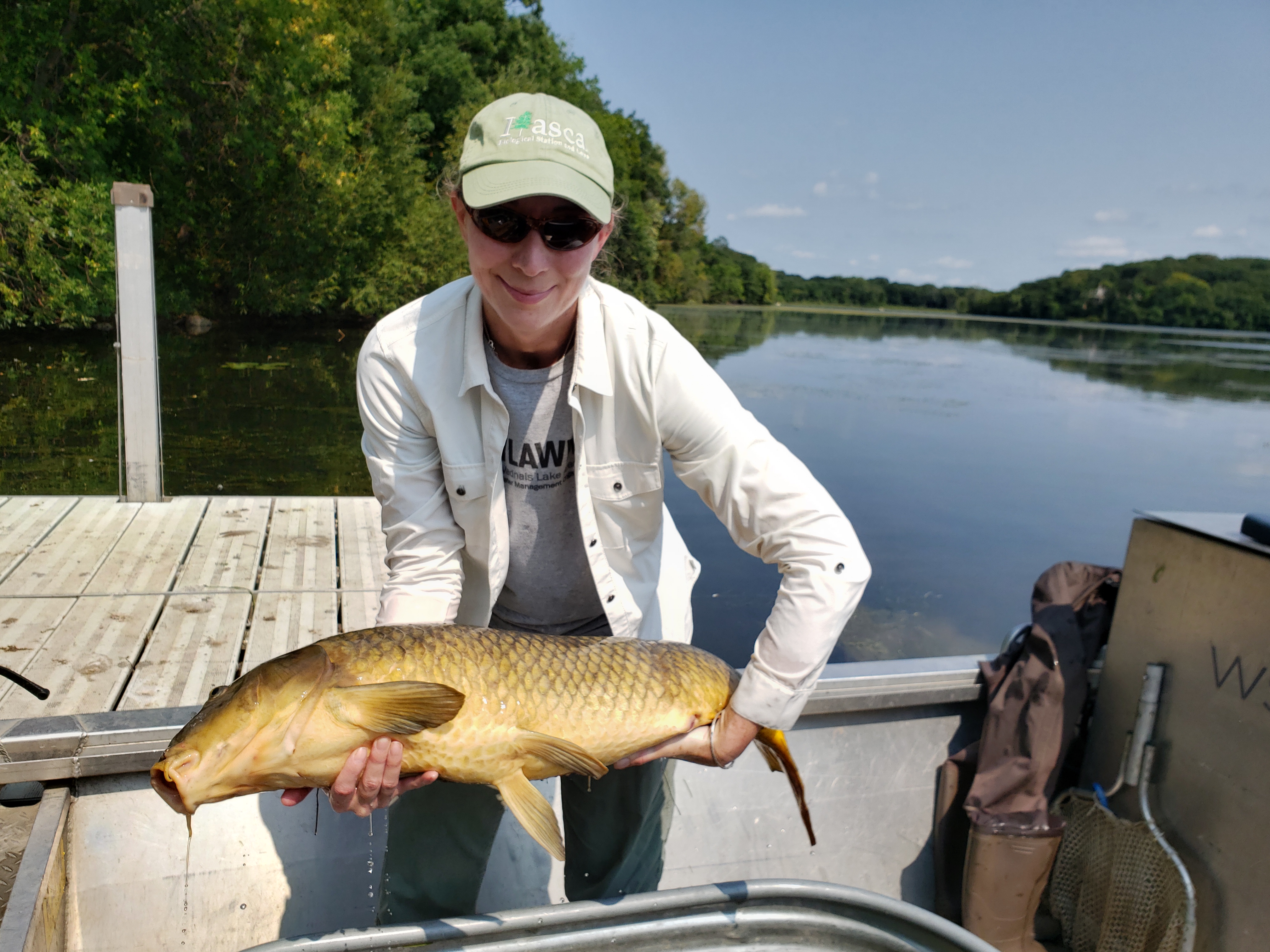
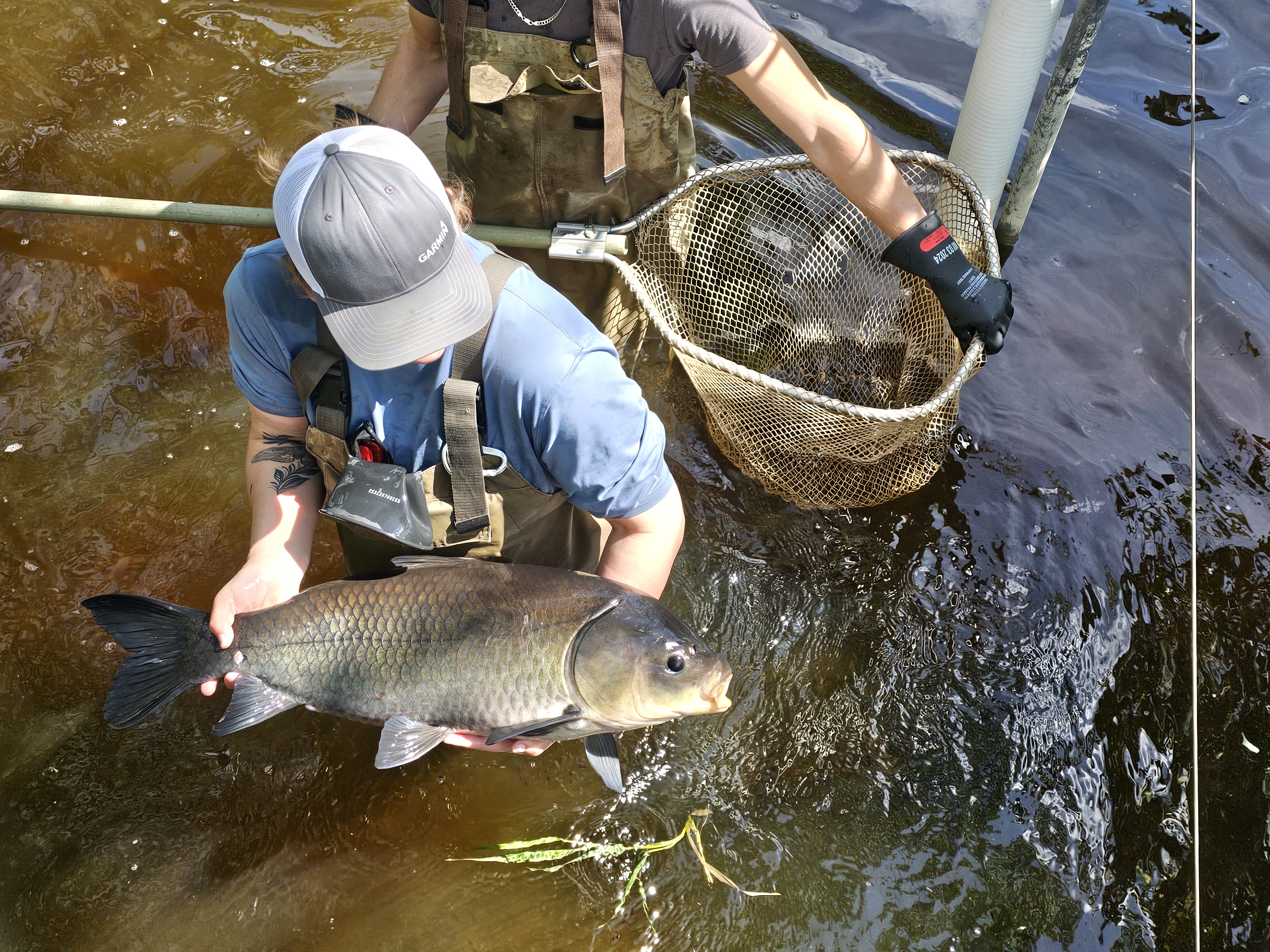
Common carp are an invasive species in Minnesota. They were intentionally brought to the Midwest in the 1880s as a game fish, but today, they wreak havoc on local waters. In addition to stirring up phosphorus, which contributes to algae growth, they disrupt native aquatic plants and decrease water quality overall. The long lifespan of carp is an additional challenge; carp found in removals from Pleasant Lake have been in their mid-40s to early 50s.
This carp removal project has spanned multiple years and yielded promising results.
This work is funded by VLAWMO capital improvement funds. Early project research and implementation were supported by partnerships with St. Paul Regional Water Services (SPRWS) and the North Oaks Home Owners' Association (NOHOA).
Pleasant Lake is listed as impaired for nutrients. Invasive common carp stir up sediment and nutrients that stimulate algae growth and reduce water quality. They also uproot the aquatic plants that are critical to a balanced ecosystem. Carp removal is a key action for working to improve lake water quality.
The current project began in 2019. It has consisted of several key phases:
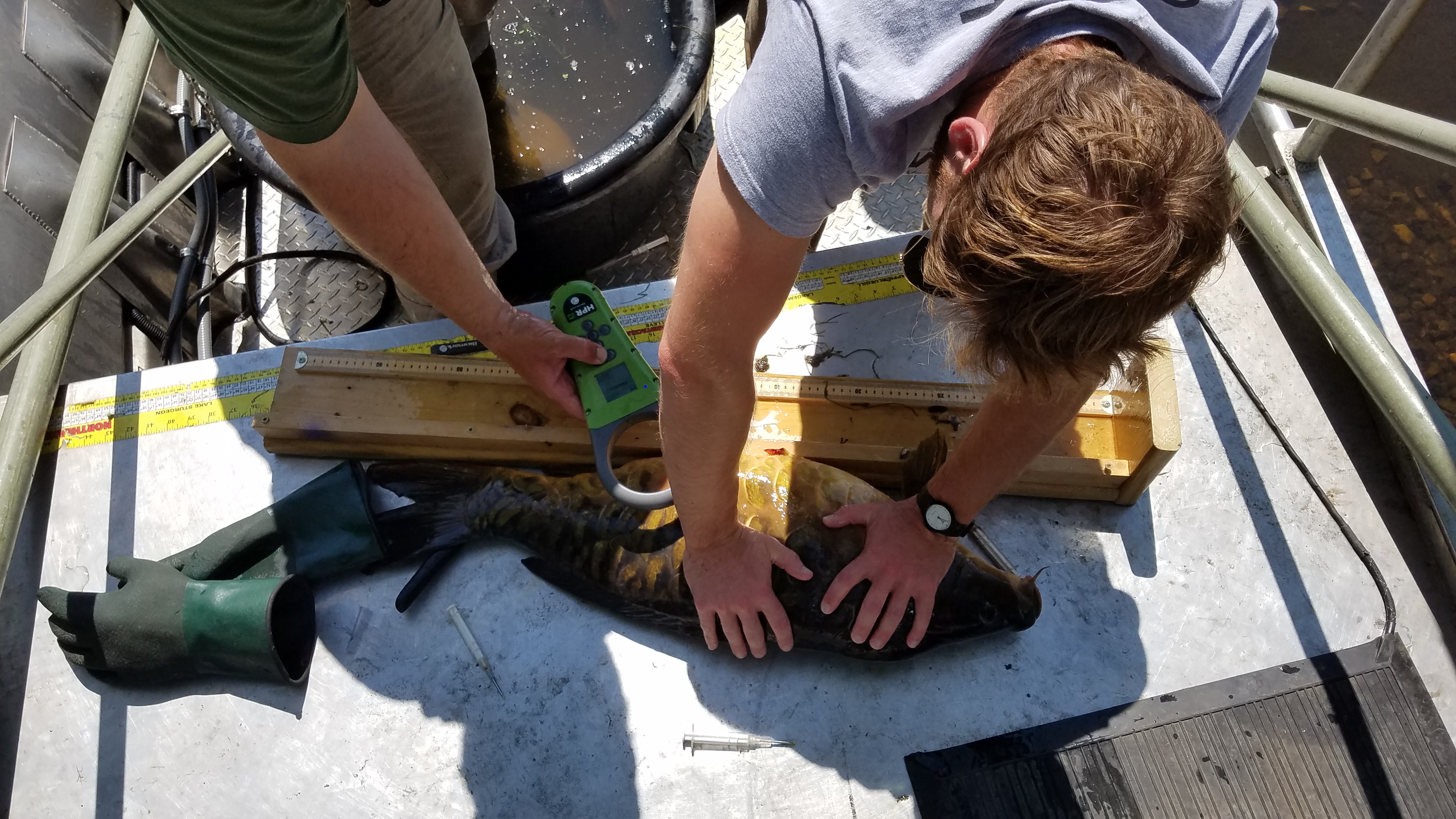
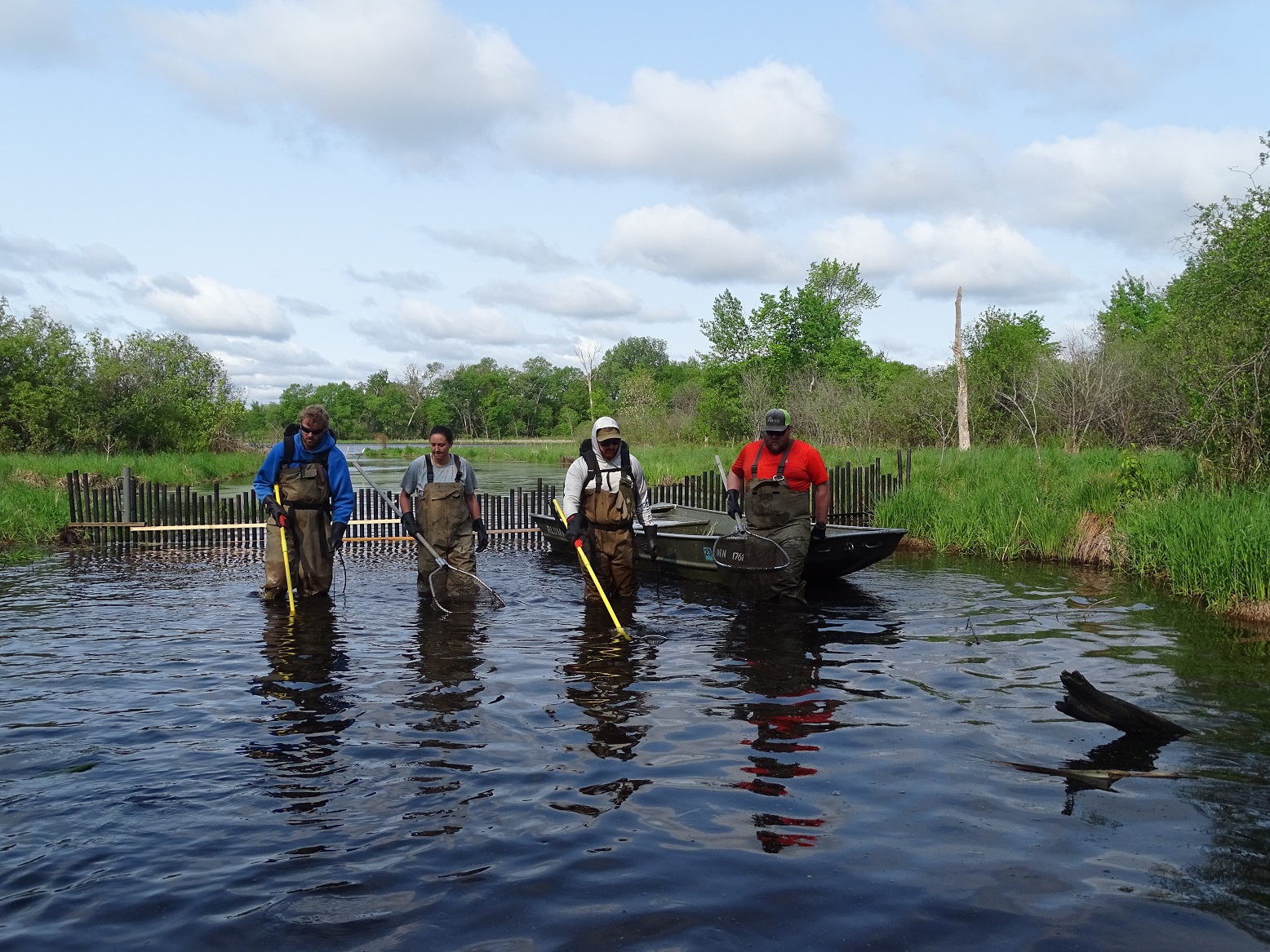
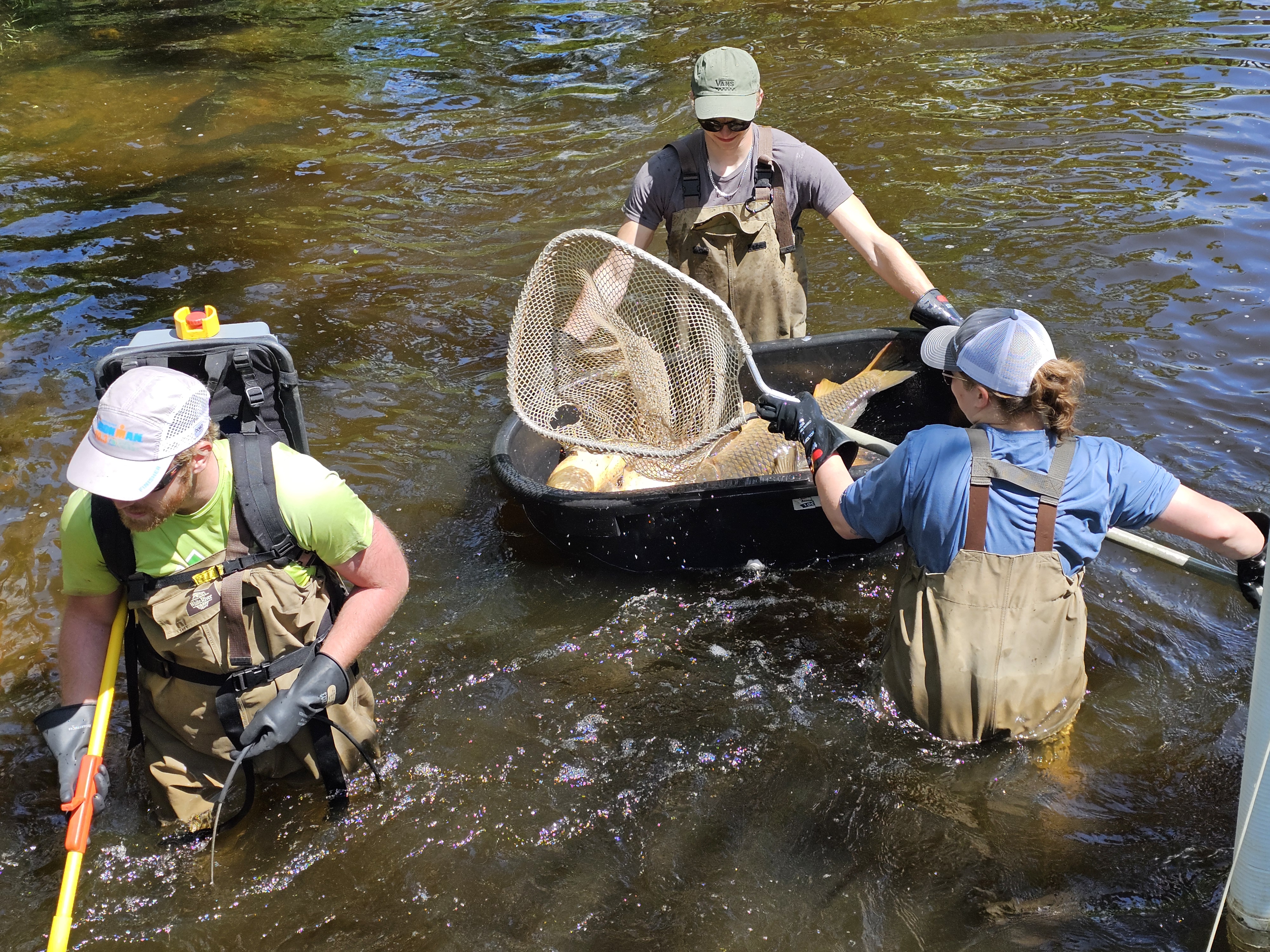
- Calculating biomass, or the amount of carp in the lake. This involves electroshocking surveys and tagging the fish. Understanding the quantity of fish in Pleasant Lake helps guide next steps.
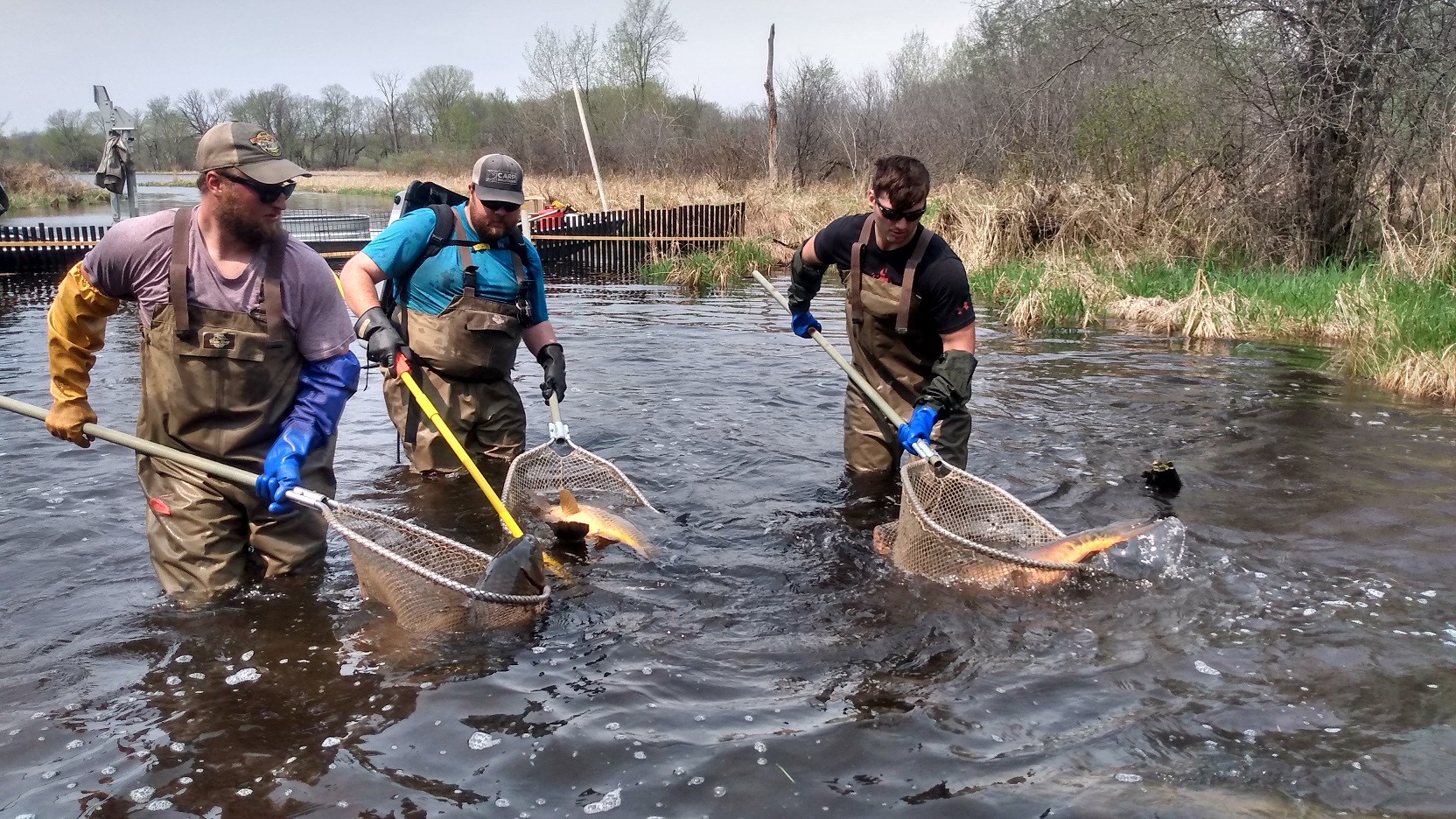
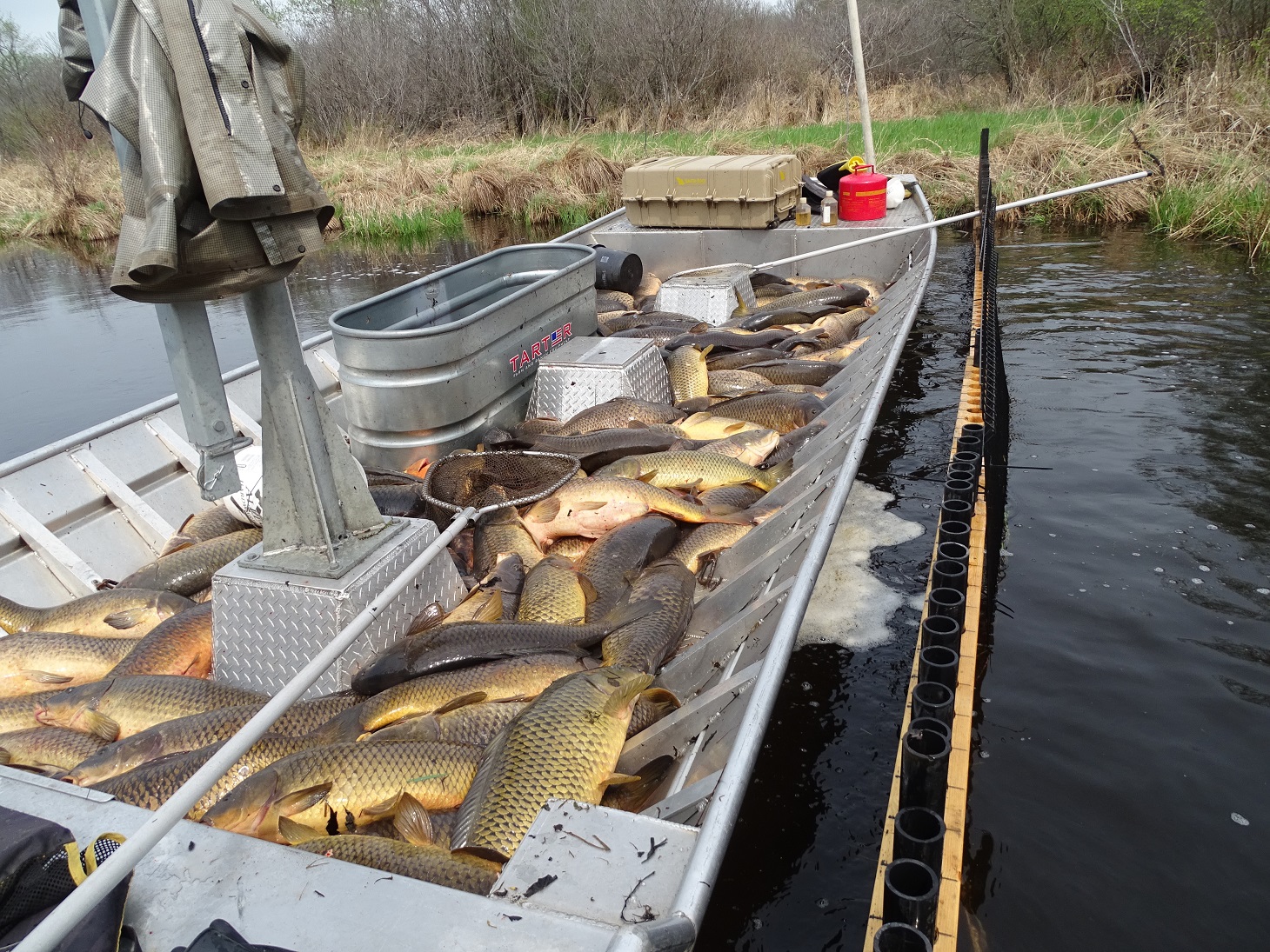
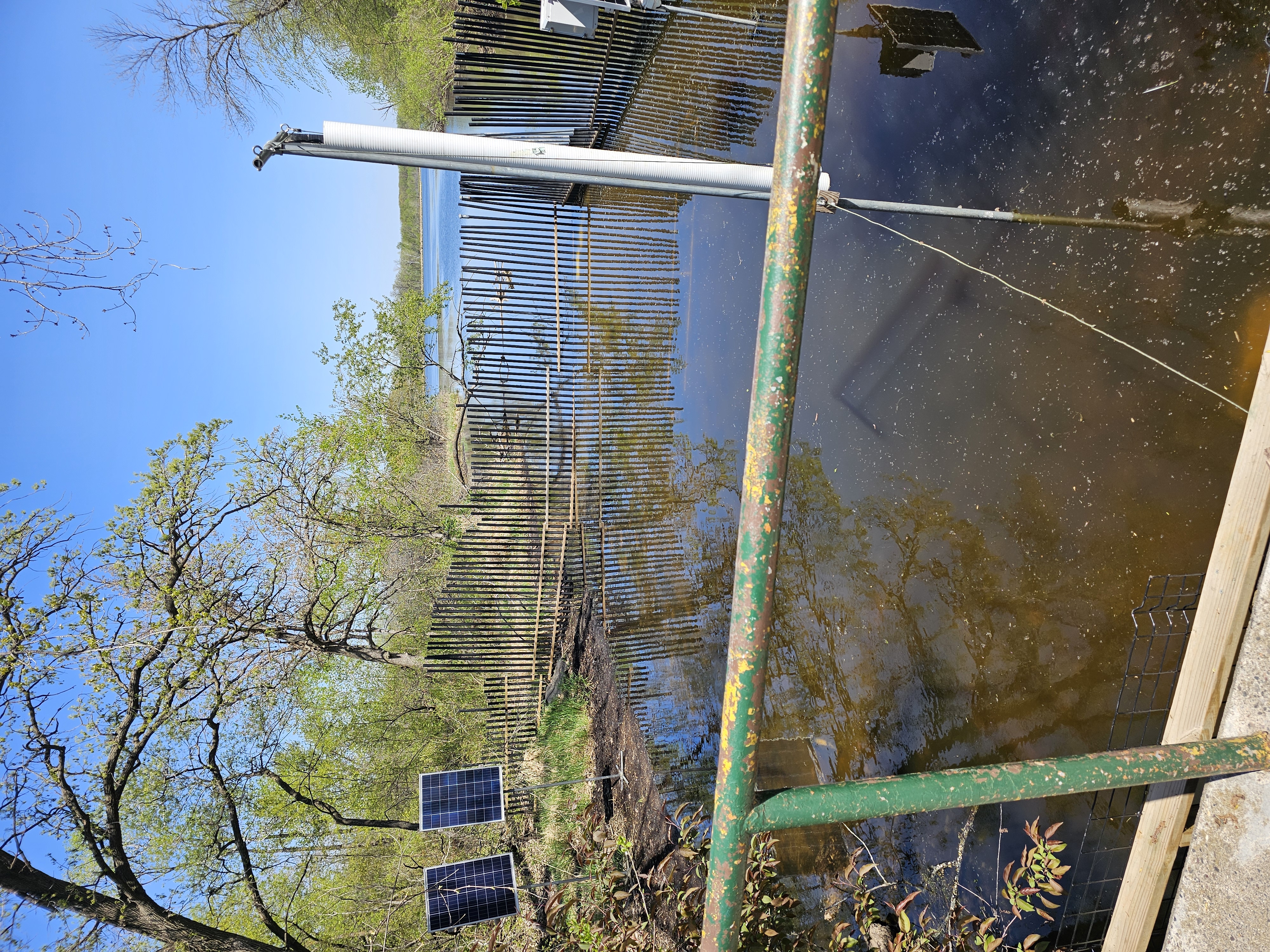
- Understanding movement patterns, especially as it relates to where carp go to spawn. The installation of double barriers allows the team to detect when large numbers of carp are inside the barriers and close the gate so that carp can be removed later the same day.
- Removing enough carp to reach the management threshold, or the target level where we expect to see measurable improvements to water quality. That threshold is 100 kg/ha. (Note: Prior to beginning carp removal on Pleasant Lake, the biomass was at 273 kg/ha, nearly three times the management threshold.)
Telemetry radio tracking began in the summer of 2021. This means that carp were implanted with transmitters that allowed staff to track their movements, providing key information for informing harvest efforts.
In subsequent years, barrier systems have been installed to allow for remote monitoring, capturing of carp, and swift removal.
Carp removals were completed in 2022-2025. Invasive common carp levels have seen significant decreases from the project's beginning. In spring of 2024 alone, roughly 12,000 pounds of carp were removed thanks to the barrier system. Reduced carp populations allow for improved water quality in Pleasant Lake.
This project is ongoing. Check back for more results.
Learn more in the most recent Carp Management Report for the Pleasant Lake system.
VLAWMO is grateful to many partners including Carp Solutions, North Oaks Company (NOC), and St. Paul Regional Water Services (SPRWS). We also appreciate the partnership of North Oaks Home Owners' Association (NOHOA) in the early phases of this program that helped lead to current removal efforts.